
A bake sale is a short, usually one-day sale of home-baked goods, run by a school, church, team or other nonprofit to raise money. Most guides on how to have a bake sale stop at recipe lists. This one is written for the organizer who has to set a goal, wrangle fifteen volunteer bakers, satisfy the health department and count the cash box at the end. It also answers the question nobody else does: when a bake sale stops being a fundraiser and becomes a home bakery that needs a license.
Note: This is a plain-English guide, not legal advice. State rules below come from the statutes and health-department pages linked in context. Confirm your own state and county rules before selling.
What makes a bake sale actually make money
Set a dollar goal first and work backwards to units, bakers and price points. Everything else follows from that number.
Say the goal is $500. At a $3 average ticket, that is roughly 170 items, which is about 15 bakers each bringing a dozen. Now you know how many sign-ups you need, how many price tiers to print, and how much packaging to buy.
Without the goal, you end up with 12 plates of chocolate chip cookies, no change for a $20 bill, and far less in the box than you hoped.
Piggyback on a crowd that already exists. The best bake sales borrow foot traffic: a Friday-night football game, a school pickup window, a church service, a concert intermission, a farmers market. Search interest in bake sales peaks in October and November, and holiday weekends follow, so fall and early December are the natural calendar slots. Get written permission from whoever controls the space, even if it is your own school's gym lobby.
Recruit with a sign-up sheet that assigns categories. A shared sheet with rows for cookies, bars, cupcakes, muffins, quick breads, gluten-free and vegan options keeps the table varied. Put three things at the top of that sheet, because organizer guides from JustGiving and the Mothers' Union agree they decide the day:
- The price points you will charge (so bakers package to match: six brownies if a bag is $5, two if it is $2).
- The packaging rule: everything individually wrapped or bagged before it arrives, in new containers.
- The "leave at home" list of foods that need refrigeration (covered below).
Keep a donor list. Michigan State University Extension's bake sale food safety guidance tells organizers to record each baker's name, phone number and item. It is a food safety record if anyone asks what was in something, and it doubles as your inventory sheet for the tally at the end.
If your group runs a sale more than once a year, borrow the pre-order habit from working home bakers: take orders for whole cakes and pies a week ahead and only bake what is sold. Our guide on how to take orders for a home bakery covers the simple forms and payment options that work for a volunteer group too. And if you are considering a farmers market table instead of a school lobby, budget for a booth fee of roughly $20 to $75 per day, as covered in how to sell baked goods online and at markets.
Best things to sell at a bake sale (and what to leave home)
The best things to sell at a bake sale are individually packaged cookies, brownies and bars, buttercream cupcakes, muffins and mini quick-bread loaves. They are cheap to make, survive a car ride, sit safely at room temperature all day and hit the $2 to $5 price points buyers expect.
The table below pulls together observed price ranges from organizer price lists and food blogs that rank for bake sale ideas (Bowl Me Over, Margin Making Mom, Tasting Table). Treat the prices as ranges, not statistics: there is no national survey of bake sale prices.
| Item | Typical bake sale price | Ingredient cost (approx.) | Travels well? | Shelf life at room temp | Notes |
|---|---|---|---|---|---|
| Chocolate chip cookies | $2 each or 3 for $5 | $0.30-$0.50 each | Yes | 3-5 days | The default top seller; bag in threes to lift the ticket |
| Brownies and bars | $2-$3 | $0.40-$0.60 each | Yes | 3-4 days | Cut uniform squares; pecan and lemon bars for variety |
| Cupcakes (buttercream only) | $3 | $0.50-$0.75 each | Fair | 2 days | No cream cheese frosting; needs a lidded container |
| Muffins | $2-$3 | $0.35-$0.50 each | Yes | 2-3 days | Morning sales; blueberry and banana are the safe bets |
| Mini quick-bread loaf | $5 | $1.25-$1.75 each | Yes | 4-5 days | Pumpkin, banana, zucchini; freezer-friendly so buyers stock up |
| Full quick-bread loaf | $8-$10 | $2.50-$3.50 each | Yes | 4-5 days | A higher price point from the same batter |
| Rice cereal treats | $2 | $0.25-$0.40 each | Yes | 3-4 days | Kid favorite; peanut-free by default unless you add it |
| Decorated sugar cookies | $3-$4 | $0.50-$0.75 each | Fair | 5-7 days | Price per cookie, never per dozen; themed to the event |
| Whole fruit pie (double crust) | $15-$20 | $4-$6 each | Fair | 2 days | Pre-order only; allowed where custard pies are not |
| Gluten-free or vegan option | $3-$4 | $0.60-$1.00 each | Yes | 2-4 days | Label clearly; usually among the first to sell out |
Two patterns from the sources are worth building your table around. Margin Making Mom reports quick breads and muffins as the top fall sellers, with full loaves and mini loaves from one batter giving two price points for one recipe. Tasting Table found single items earn more per unit than whole items: six slices at $4 beat a whole layer cake at $20, and twelve cookies at $2 beat a dozen at $10. Match the mix to the venue: singles at a side table during a game or concert, dozens and whole items at an advertised community sale where people arrive planning to buy.
Cookies are also the bake sale item that converts most easily into a real product later. If the cookie table sells out first every time, read how to start a cookie business from home before the next sale.
Bake sale ideas by season
Bake sale ideas get easier when you let the calendar pick the flavors:
- Fall: pumpkin bread (mini and full loaves), apple hand pies with a double crust, pecan bars, snickerdoodles, maple oatmeal cookies.
- Holiday: peppermint bark, gingerbread people, cranberry orange loaves, shortbread, chocolate crinkle cookies.
- Spring: lemon bars, carrot cake muffins with buttercream (not cream cheese), strawberry hand pies, coconut macaroons.
- Year-round: chocolate chip cookies, brownies, rice cereal treats, banana bread.
What to leave at home
Health departments in Sharon, Massachusetts, King County, Washington and Michigan all publish lists of foods that cannot be sold at a bake sale, and they match closely. Anything that needs refrigeration is out:
- Cream cheese frosting or fillings (this catches carrot cake and red velvet cupcakes)
- Cheesecake
- Custard, cream and pumpkin pies (King County specifically allows double-crust fruit pies and bans pumpkin pie)
- Whipped cream toppings and meringue pies
- Meat or cheese fillings
- Cut fruit
- Home-canned goods
Put this list on the sign-up sheet so nobody arrives with a cheesecake you have to turn away.
Bake sale pricing: three price points and whole dollars
Bake sale pricing works best with three or four fixed tiers in whole dollars, typically $2, $3 and $5, plus $10 to $20 for whole cakes and pies. Whole dollars mean no coin tray to manage and no line forming while someone counts quarters; one organizer notes their bank charges about 10% to count coin deposits. Bundles such as "3 for $5" or "6 brownies for $10" lift the average ticket without adding a tier.
Print the prices on a big sign and on a tent card at each tray. A verbal menu slows the line and invites haggling. In the last hour, either mark everything down to the next tier or switch to "pay what you want" so you are not carrying trays home.
Why are these prices so low? A $2 bake sale cookie is a donation price, possible only because the ingredients were donated and the labor volunteered.
Baker Setup's formula for a real home bakery is Price = (Ingredient cost x 3) + (Labor hours x $15-$25) + Packaging. Under that math a cookie with $0.40 of ingredients and ten minutes of labor prices out at $3 or more, and $2 is the floor even for a wholesale account. If you are charging for your own time, use how to price baked goods with a cottage bakery formula and do not let bake sale habits set your business prices.
Is a bake sale legal without a license? (nonprofit vs. selling for yourself)
Most states exempt a nonprofit, school or church bake sale of shelf-stable baked goods from food-establishment licensing, under a rule that is separate from cottage food law. Cottage food law is the route for an individual selling for profit from a home kitchen. The charity exemption usually comes with conditions: a nonprofit sponsor, non-TCS (shelf-stable) foods only, individually wrapped items, a posted sign, and sometimes a cap on events or days per year. Counties and cities can add a form even where the state exempts.
| Scenario | Usually exempt from licensing? | Why | What you still must do |
|---|---|---|---|
| PTA, church or team fundraiser selling cookies, bars, breads | Yes, in most states | Nonprofit sponsor plus shelf-stable foods fits the exemption | Wrap, label, post the sign, keep a donor list, check county forms |
| Same group selling cheesecake or cream pies | No | These are TCS foods that need refrigeration | Leave them home or get a temporary food permit |
| Individual selling cookies every Saturday for income | No | That is a cottage food operation, not a fundraiser | Follow your state's cottage food law |
| Cottage baker donating goods to a charity sale | Generally fine | The sale is the nonprofit's, not the baker's | Check your state; label as usual |
| School-day sale on campus | Depends | USDA Smart Snacks rules apply during the school day | Count against your state's exempt-fundraiser limit |
| Friday-night game or weekend sale at school | Yes (Smart Snacks does not apply) | Smart Snacks covers the school day only | Normal bake sale rules still apply |
State examples
- Ohio: ORC 3717.22(B)(4) exempts a 501(c)(3) nonprofit (and people selling for its benefit) from retail food establishment licensing when the food is risk level one, sales happen inside a building, and the sale runs no more than 7 consecutive days or 52 separate days per licensing period. For the for-profit route, see the Ohio cottage food law.
- Michigan: MSU Extension, aligned with MDARD, states that bake sales run by charitable, religious, fraternal or other nonprofit organizations serving only home-prepared foods do not need a food establishment license, but remain subject to inspection. The Michigan cottage food law covers individual sellers.
- Washington (King County): a residential kitchen preparing only non-TCS baked goods, wrapped sanitarily and sold by a nonprofit for religious, charitable or educational reasons, needs no permit, but must post a visible sign that the food comes from a kitchen not inspected by a regulatory authority.
- Massachusetts (Sharon Board of Health): bake sales sponsored by individuals or nonprofit groups, limited to low-risk items, are a one-time, one-location event with no permit required. The sponsor keeps a list of each item with the baker's name, address and phone, posts a "Home Baked" sign, wraps individually and provides an ingredient list.
- Texas: SB 541, effective September 1, 2025, redefined "cottage food production operation" to include a 501(c)(3) nonprofit producing from the home of an officer or director, raised the sales cap to $150,000, and barred local governments from requiring a license, permit or fee for cottage food sold direct to consumers. Details in the Texas cottage food law.
- Minnesota: per MDA guidance, occasional bake sales where you are not regularly engaged in selling do not require cottage food registration. See the Minnesota cottage food law.
- California: the Retail Food Code has a nonprofit baked-goods exemption that counties administer; expect a one-page exemption form and possible proof of 501(c)(3) status.
- Illinois and Pennsylvania: both have historically exempted nonprofit fundraiser sales of non-hazardous home-baked goods (Illinois via P.A. 100-0035, Pennsylvania via the 2010 "Pie Bill"), but we have not verified the current codified text, so confirm with your county.
- Florida: we found no bake-sale-specific exemption. Ask DBPR or your county health department; an individual can fall back on the section 500.80 cottage food route, which needs no permit.
School-day sales and Smart Snacks
USDA Smart Snacks nutrition standards apply only to food sold on campus during the school day. After-school games, weekend plays and evening events are unaffected, so a Friday-night-game bake sale is outside the rule. For sales during the school day, each state education agency sets the number of exempt fundraisers per school per year; as of the last published policies, Indiana allowed 6 per building per year (one day each) and Georgia 30 per school (up to three days each). Those figures date from 2014-2015, so check your state education agency. Source: USDA Smart Snacks and exempt fundraisers.
The bottom line: the moment it is your money, not the charity's, you are a cottage food operation. A baker who runs a "bake sale" from the driveway every Saturday for their own income is selling cottage food and needs to meet their state's registration, labeling and sales-cap rules. Start with cottage food laws by state, and if you plan to sell at markets or venues regularly, read the one-page explainer on home bakery insurance, because venues ask for a certificate even when the state does not.
Bake sale packaging and labeling that passes a health inspector and sells faster
Bake sale packaging has one rule every health department agrees on: every item individually wrapped in a new container before it leaves the baker's kitchen. Plastic wrap, foil, waxed paper or a clear cello bag all count. MSU adds that bakers should minimize handling after baking, use tongs for anything unwrapped, and package in one-to-two-serving and family sizes so there is something at each price tier.
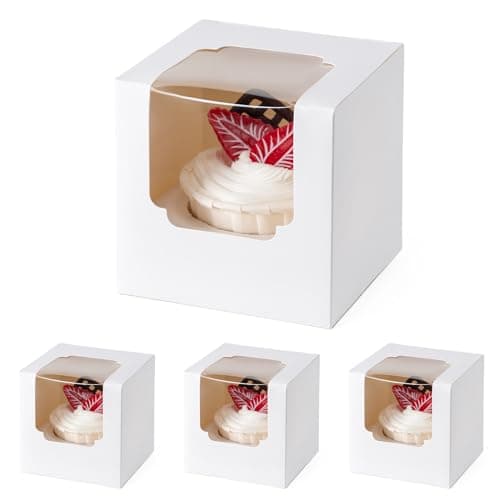
Clear packaging sells. Buyers want to see the brownie, and a cello bag with a twist tie or a windowed box does that for pennies.
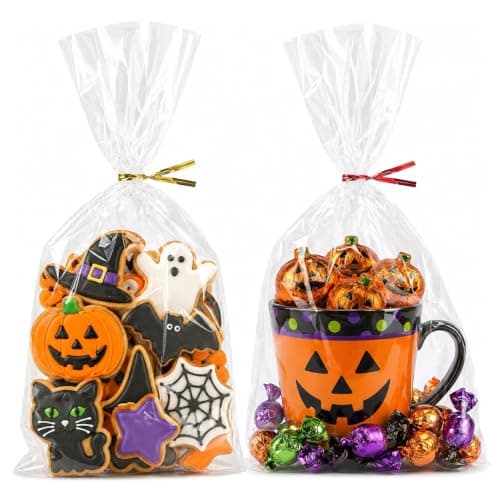
Morepack Cellophane Treat Bags 7x13 In 200 PCS Clear Cellophane…
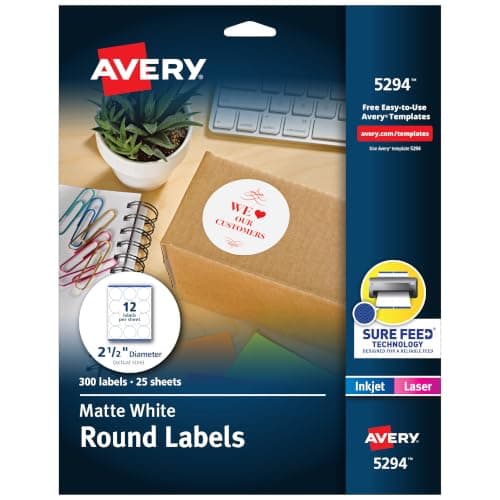
The packaging math from our best bakery packaging for small businesses guide applies here with one adjustment: bake sale margins are thin because prices are low. A cello bag runs about $0.12 (roughly $12 per 100), a window box about $0.60 in 50-count packs, and a printed label about $0.20. Tell bakers to keep packaging under $0.25 per unit for $2 items (a bag and a label) and save the $0.60 window box for the $5 and $10 tiers. For pre-ordered whole cakes, the bakery box sizing guide covers which box fits which pan.
Label every package
Federal allergen labeling law (FALCPA) applies to packaged food sold by businesses, and a charity bake sale is usually outside that jurisdiction. Every health-department bake sale guide tells you to label anyway, and it is the right call. Each package gets:
- The item name.
- The baker's name and contact (for your organizer list; it can be on the back).
- A full ingredient list.
- A "Contains:" line naming any of the 9 major allergens present: milk, eggs, fish, crustacean shellfish, tree nuts, peanuts, wheat, soybeans and sesame. The FDA added sesame under the FASTER Act, with mandatory labeling as of January 1, 2023 (FDA FASTER Act summary).
Then post the state-required sign on the table itself: "Home Baked" in Massachusetts, "not inspected by a regulatory authority" in King County, and similar wording elsewhere.
A sheet of printable round labels covers both jobs: one label on the back with ingredients and allergens, one on the front to seal the bag.
If you are a cottage baker donating to the sale, your normal business label already exceeds these requirements. The full six-element label (product name, ingredients, net weight, business name and address, allergens, home-kitchen disclaimer) is covered in how to label cottage food baked goods; do not strip it down for the sale.
Display, checkout and day-of logistics for a bake sale table
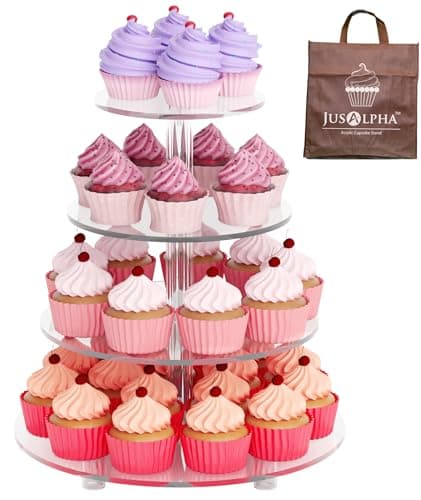
A bake sale table sells more when it goes vertical, groups items by price, and runs cash through one person. Tasting Table's organizer advice is to use a multi-tier dessert stand so people see the whole selection from ten feet away, and to put singles on one table and whole items (loaves, pies, pre-orders) on another so the impulse line moves fast.
Practical setup for a two-table sale:
- A tiered acrylic stand for cupcakes and decorated cookies at eye level, with flat trays of bagged cookies and bars in front.
- A festive tablecloth (plastic roll is fine) and price signs large enough to read from the line.
- Tent cards at each tray with the price and a short allergen note ("Contains: wheat, milk, eggs").
- Bite-size samples under a covered dome, served with tongs, never fingers.
- The donor list, a tally sheet by item, and a pen taped to the table.
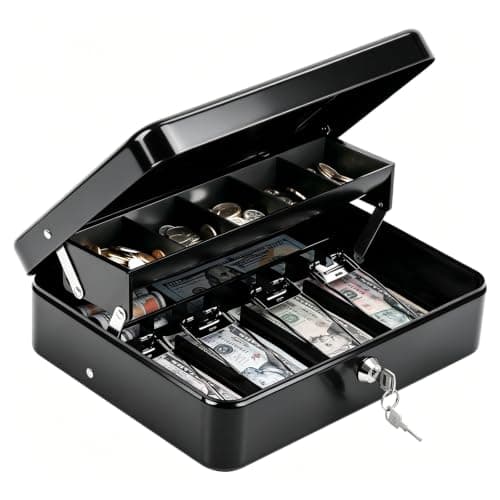
Checkout. Put one person on money only and give them a locking cash box with a float of $50 to $100 in ones and fives (our rule of thumb, not a sourced figure). Print a QR code for Venmo or Cash App and tape it to the table: both are fee-free but leave no itemized record, so note digital sales on the tally sheet. A Square reader is optional for a one-day sale; the hardware is free or under $60 depending on the model, and the fee is 2.6% + $0.10 per tap.
Keep the tally by item. Knowing mini loaves sold out by 9 a.m. and sugar cookies did not is the best data you will take into the next sale.
Transport. Lidded sheet pans or bins stack safely in a car; an insulated bag keeps buttercream firm on a cold morning. Arrive 45 minutes before the crowd.
Leftovers plan. Decide before the sale: last-hour markdown to the next tier, pay-what-you-want for the final 30 minutes, or a pre-arranged donation to a shelter or fire station. Do not carry trays home.
From bake sale to home bakery: when to go legit
Three signals say a bake sale has outgrown the exemption: people ask for repeat orders, you are selling more than occasionally, and you want to keep the money. In short: any one of them means you are no longer running a fundraiser. You are running a cottage food business, and the rules change.
The bridge is short, and most of it is already on this site:
- Check your state law. Cottage food laws by state lists the registration step and sales cap for every state. Texas has no license and a $150,000 cap; Michigan has no license and a $50,000 cap; California needs a Class A registration or Class B permit.
- Price with the formula, not the bake sale table. Expect your cookie price to roughly double.
- Build a compliant label and get insured. The labeling guide linked above and the insurance explainer cover both in an afternoon.
- Start with the product that sold out. For most bake sales that is cookies, and how to start a cookie business from home is the shortest legal path to a first sale.
Related reading
- Cottage food laws by state - the for-profit route, state by state.
- How to price baked goods: a cottage bakery formula - the full cost-plus method behind the pricing paragraph above.
- Cottage food labels: how to label baked goods to sell - the six mandatory elements and every state's disclaimer.
- Best bakery packaging for small businesses - boxes, bags and labels with unit costs.
- How to sell baked goods online from home - turning bake sale demand into orders.
- How to start a cookie business from home - the natural next step after a sold-out cookie table.
What to do next
- Set the dollar goal and the date, and pick a venue that already has a crowd.
- Recruit bakers with a category sign-up sheet that lists the price points, the wrap-everything rule and the leave-at-home foods.
- Confirm your state and county rule, any day cap, and the exact wording of the sign you need to post.
- Order packaging, labels, a tiered stand and a cash box two weeks out, and print the price signs and QR code.
- If you want to keep doing this for your own income, read how to start a home bakery and make the next sale your first legal one.
Affiliate disclosure
Baker Setup is reader-supported. When you buy through links on our site, we may earn an affiliate commission at no extra cost to you. We only recommend products we've researched against the field, never sponsored placements.