

Note: This is a plain-English guide, not legal advice. Legal figures come from our state guides, linked in context; cost and pricing figures come from our startup cost and pricing formula research. Confirm your own state's rules before selling.
Why cookies are the easiest cottage food product
Cookies pass the shelf-stability test that governs every cottage food law in the country, which means the legal analysis that stops cake decorators never even starts.
Compare the three common starting products:
| Product | Cottage food status | Ships in-state? | Equipment beyond basics |
|---|---|---|---|
| Cookies | Legal in every state | Yes, well | None |
| Layer cakes | Legal, but frosting rules bite | Poorly | Turntable, tall boxes, spatulas |
| Cheesecake, cream pies | Excluded almost everywhere | No | N/A |
That frosting row is the real difference. Florida bans real-butter buttercream outright, permitting only shortening- or margarine-based versions, and Michigan approves just two buttercream recipes. A cookie baker never has that conversation.
The bottom line: cookies give you the shortest path from decision to first legal sale, and the cheapest way to find out whether you like running a food business.
Get legal first
Your state does one of three things, and this determines your timeline more than anything else.
- No permit — Texas, Florida, Michigan, Georgia, and Ohio's cottage food track. You can sell as soon as any required training is done.
- Registration — Illinois (county, annual, plus a Certified Food Protection Manager) and California Class A.
- Permit + inspection — California Class B.
Training is a separate question from permits. Texas requires no license but does require an accredited food handler's certificate (~$10–15, a couple of hours online). Illinois requires the much heavier CFPM credential — start that first if you're there.
Full detail in the cottage food permit guide and the state-by-state comparison. Local business licensing and zoning are separate again, and apply almost everywhere.
Choose three or four cookies, not twenty
A cookie business fails on complexity before it fails on demand. Twenty varieties means twenty ingredient inventories, twenty costings, and no repeat muscle memory on any of them.
Pick from three lanes and commit:
- Drop cookies — chocolate chip, oatmeal, snickerdoodle. Fastest to produce, lowest price point, best margin per hour.
- Decorated sugar cookies — highest price per unit, by far the most labor. Priced per cookie, never per dozen.
- Bars and brownies — cut from a single sheet, excellent yield per hour of work, ship well.
A strong opening menu is two drop cookies, one bar, and — only if you genuinely enjoy the work — one decorated option.
Pricing: the decorated-cookie trap
Price = (Ingredient cost × 3) + (Labor hours × $15–25) + Packaging cost. The 3× ingredient multiplier absorbs utilities, equipment wear, spoilage, and packaging buffer.
Two worked examples, and the gap between them is the whole lesson:
| Dozen drop cookies | Dozen decorated sugar cookies | |
|---|---|---|
| Ingredients | $3 × 3 = $9 | $4 × 3 = $12 |
| Labor | 1.0 hr × $20 = $20 | 3.5 hrs × $20 = $70 |
| Packaging | $3 | $6 |
| Price | $32 | $88 |
| Per cookie | $2.67 | $7.33 |
Decorated cookies are not a dozen of anything — they're individually made objects that happen to come in twelves. The dough is nearly the same; the labor is three and a half times higher. Bakers who quote decorated work at drop-cookie prices are paying roughly $50 per order for the privilege.
Quote decorated cookies per cookie, at roughly $4–7 depending on design complexity, and set a minimum order. Add 25–40% on top for fully custom designs. The complete method is in our pricing formula guide.
What you actually need to buy
A cookie-only setup is the cheapest entry into cottage food, because the expensive gear is all cake gear. No turntable, no offset spatulas, no tall boxes, no cake drums.
The two purchases that gate everything:
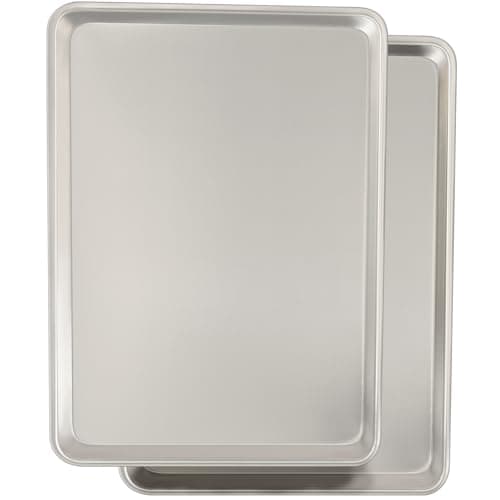
Then sheet pans, which are the actual production constraint — your output per session is literally how many pans fit in your oven.
Against our startup cost tiers, a cookie business sits comfortably in the lean-to-standard band, $340–1,500, versus the $1,400–3,700 a cake operation typically needs. See the essential tools list for the full build.
Packaging and shipping
Cookies are the one baked good that genuinely survives the mail, which makes in-state shipping a real channel rather than a gamble. Texas, Florida, Michigan, and Illinois all allow it; interstate shipping is generally prohibited under cottage food law, with North Dakota (SB 2386, 2025) as the notable exception.
What works:
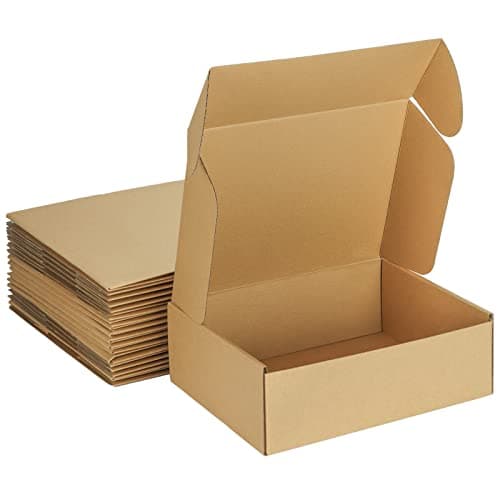
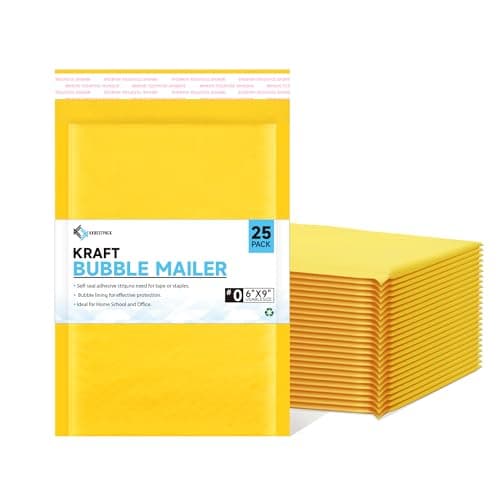
- Rigid mailers or small corrugated boxes, never padded envelopes — cookies arrive as crumbs otherwise
- Cookies stacked and shrink-wrapped or sleeved in columns so they can't rattle
- A bar or brownie tray as the safest shipped product, since a solid slab has nothing to snap
Every unit still needs a compliant label: business name and address (or a state ID number where offered, as in Georgia), ingredients in descending order, allergens, net weight, and your state's disclosure wording. Our labeling guide has the layout, and bakery packaging covers the presentation side.
Finding your first customers
Pick one channel and work it for ninety days. Cookie businesses spread themselves across five platforms and get traction on none.
The channels that suit cookies specifically:
- Corporate and office orders — recurring, high volume, insensitive to price, and they want a plain product delivered reliably. The most underrated cookie channel there is.
- Farmers markets — cookies are the ideal market product: no refrigeration, impulse price point, easy to sample. Note that markets almost always require a certificate of insurance.
- Holiday and event decorated orders — high margin, seasonal spikes, needs a booking cutoff so December doesn't collapse.
- In-state shipping — works where allowed, and cookies are the product that justifies it.
On insurance: no state cottage food law we cover requires it, but markets and venues do, at $25.92–$44/month for $1M/$2M coverage. See home bakery insurance.
Scaling: what breaks first
Oven capacity, then order intake, in that order.
Sheet pans per session is a hard ceiling that no amount of demand fixes. Before you consider a commercial kitchen, get more out of the one you have: batch a single dough type per session, freeze portioned dough balls so bake day is only baking, and set fixed production days rather than baking to each order.
Order intake breaks second, usually around five simultaneous orders, when Instagram DMs stop being a system. Our order workflow guide covers the fix, and a simple website removes most of the back-and-forth.
Watch your cap as volume climbs: $150,000 in Texas, $250,000 in Florida, $50,000 in Michigan, no cap in Georgia, Ohio, or Illinois.
Related reading
- How to start a home bakery: step-by-step — the full twelve-step version of this path.
- Cottage food permit: how to get one in your state — the legal step in detail.
- How to price baked goods: a cottage bakery formula — the method behind the decorated-cookie math.
- How much does it cost to start a home bakery? — the tier tables in full.
What to do next
- Home bakery business plan: template and example — put your menu, prices, and break-even on one page.
- How to sell baked goods online from home — the shipping channel cookies are built for.
- Best bakery packaging for small businesses — boxes, sleeves, and labels that survive transit.
Affiliate disclosure
Baker Setup is reader-supported. When you buy through links on our site, we may earn an affiliate commission at no extra cost to you. We only recommend products we've researched against the field — never sponsored placements.