
Note: This is a plain-English overview, not legal advice. Cottage food rules change often — always confirm the current details with your state's Department of Agriculture or Health before you start selling. Figures below are drawn from state agencies and the Forrager cottage-food database and reflect 2025/2026 rules.
What is a cottage food law?
A cottage food law lets individuals make certain low-risk foods in their home kitchen and sell them to the public without a commercial license or a separate inspected facility. The trade-off: you're limited to non-perishable, shelf-stable foods (breads, cookies, candy, jams), you usually have a sales cap, and you can only sell within your own state.
These laws exist in every state, but the details vary enormously — which is why a baker in Florida can start the same day with zero paperwork, while a baker in Washington needs a permit, an inspection, and stays under a $35,000 ceiling.
Do you need a license to sell baked goods?
States fall into roughly three buckets:
- No license needed — you can start selling approved non-perishable foods immediately (sometimes after a food-safety course). Examples: Florida, Texas, Ohio, Georgia, Colorado.
- Registration required — you sign up with a state or local agency, but there's usually no inspection. Examples: New York, Illinois, Minnesota.
- Permit + inspection required — your home kitchen is inspected before approval. Examples: California (Class B), Washington, North Carolina, Pennsylvania.
The single most important thing is to find which bucket your state is in before you bake your first order.
Cottage food laws by state (comparison)
| State | License / permit? | Annual sales cap | Online sales? | In-state shipping? |
|---|---|---|---|---|
| California | Yes — Class A reg / Class B permit | ~$86,206 (A) / ~$172,411 (B) | Yes | Yes |
| Texas | No (only for perishables) | $150,000 | Yes | Yes |
| Florida | No | $250,000 | Yes | Yes |
| Michigan | No | $50,000 | Yes¹ | Yes |
| Ohio | No for shelf-stable — refrigerated goods need a $10/yr registration⁴ | None | Yes | Yes |
| Georgia | No (food-safety course) | None | Yes | Yes |
| North Carolina | Yes — application + inspection | None | Yes | Yes |
| New York | Yes — free registration | None | Yes | Yes |
| Pennsylvania | Yes — registration ($35) + inspection | None | Yes | Yes² |
| Illinois | Yes — county registration (≤$50) | None | Yes | Yes |
| Minnesota | Yes — MDA registration ($0 Tier 1 / $50 Tier 2) | $78,000 | Yes | No⁵ |
| Washington | Yes — permit + inspection (~$355) | $35,000 | Yes | No³ |
| Colorado | No (training course) | $10,000 per product | Yes | Yes |
¹ Michigan online/mail/delivery sales require giving the buyer a chance to interact with you directly (in person or virtually) before purchase. ² Pennsylvania home bakers register as an inspected limited food establishment, and the state allows out-of-state and internet sales on that registration — but interstate sales bring FDA jurisdiction and federal nutrition-labeling rules. Every other state in this table is in-state only. Outside this table, North Dakota (SB 2386, 2025) is the notable state that dropped its ban on interstate cottage food sales. ³ Washington allows online orders but they must be picked up or delivered in person — shipping is not permitted.
⁴ Ohio splits home food businesses into two tracks. An unregistered cottage food production operation needs no license, fee, or inspection — but only covers shelf-stable items on ODA's approved list. The moment you sell something refrigerated (cheesecake, cream pie, filled donuts), you fall outside that definition and must register as a home bakery under Ohio Revised Code 911.02: $10 a year, renewed by September 30, plus a kitchen inspection. See the Ohio guide for which track you're on.
⁵ Minnesota allows online orders, but products must be handed over in person or delivered within the state — no shipping. A 2025 law allows shipping and lowers the fee to $30 starting August 1, 2027; see the Minnesota guide.
State guides so far: California · Florida · Georgia · Illinois · Michigan · Minnesota · Ohio · Texas
State caps and rules change (Texas and Michigan both raised their numbers in 2025–2026). Treat this as a starting point and confirm with your state agency.
Sales caps: how much you can make
Caps range widely:
- No cap at all: Ohio, Georgia, North Carolina, New York, Pennsylvania, Illinois
- High cap: Florida ($250,000), California Class B (~$172,411), Texas ($150,000)
- Moderate cap: California Class A (~$86,206), Minnesota ($78,000), Michigan ($50,000)
- Low cap: Washington ($35,000), Colorado ($10,000 per product)
When you exceed your cap, the path forward is the same everywhere: move production into a licensed commercial or shared-use (commissary) kitchen and operate as a registered food establishment. Until then, the cap is your ceiling — so price your menu to make the most of it. Our cottage bakery pricing formula shows how.
What you can (and can't) sell — in general
The common thread across all states is shelf-stable, non-perishable foods. Almost universally allowed:
- Breads and baked goods that don't need refrigeration
- Cookies, brownies, and shelf-stable cakes
- Candy, chocolate, and fudge
- Jams, jellies, and honey
- Dry mixes, granola, and popcorn
Almost universally prohibited:
- Anything needing refrigeration (cheesecakes, cream pies, custards)
- Meat, poultry, and seafood
- Canned or acidified foods (pickles, salsas, hot sauces)
The biggest state-to-state difference is frosting: Texas and California allow buttercream, Florida prohibits it, and Michigan allows only two specific recipes. If you decorate cakes, check your state's frosting rule first.
How to label your products
Labeling requirements vary, but most states require some combination of:
- Your business name and address (or a registration number)
- A full ingredient list and an allergen "Contains:" statement
- The net weight
- A state-specific disclaimer (wording like "Made in a home kitchen that has not been inspected…")
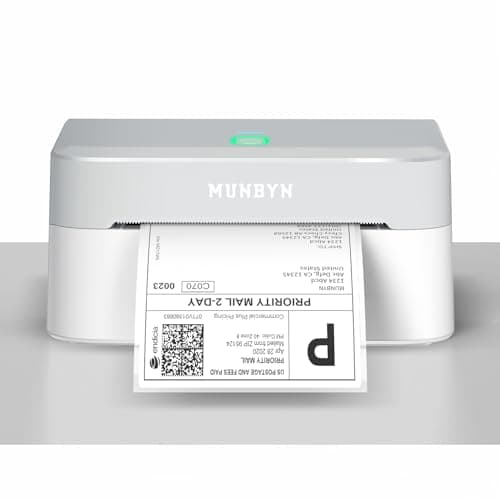
Because most states require an ingredient list and a net-weight figure, two inexpensive tools make compliance simple anywhere. A thermal label printer produces clean, repeatable labels with no ink:
And a kitchen scale gives you the accurate net weights your labels legally require:
How to find and follow your state's law
- Search your state's Department of Agriculture or Health for "cottage food" — that's the authoritative source.
- Identify your bucket — no license, registration, or permit + inspection.
- Check the approved foods list and confirm every product you plan to sell qualifies.
- Complete any required food-safety course and register or apply if needed.
- Build compliant labels to your state's exact wording and type-size rules.
- Confirm your sales channels — in person, online, shipping — and your cap.
For the four most-searched states, we've written detailed walkthroughs:
- Texas cottage food law: what you can sell
- Florida cottage food law: sell baked goods from home
- Michigan cottage food law: 2026 rules
- California cottage food law: Class A & B explained
Related reading
- Cottage food permit: how to get one in your state — the three regulatory models, and exactly what to file under each.
- Home bakery insurance: real 2026 costs — what markets require even when your state doesn't.
- How much does it cost to start a home bakery? — real 2026 budgets, from lean to pro.
- How to price baked goods: a cottage bakery formula — charge so your menu actually profits.
- Essential baking tools for starting a home bakery — the equipment list once you're cleared to sell.
What to do next
- How to take orders for a home bakery — the order-intake workflow every cottage baker needs.
- How to build a home bakery website — set up online ordering for the states that allow it.
- Best bakery packaging for small businesses — boxes, bags, and labels that look professional.
Affiliate disclosure
Baker Setup is reader-supported. When you buy through links on our site, we may earn an affiliate commission at no extra cost to you. We only recommend products we've researched against the field — never sponsored placements.