
Note: This is a plain-English guide, not legal advice. Verify the current rules with the Florida Department of Agriculture and Consumer Services (FDACS) before you start selling.
Do you need a license to sell baked goods in Florida?
No. Florida's cottage food law (Florida Statutes §500.80) is among the most permissive in the U.S. You need no license, no permit, no registration, no kitchen inspection, and no food-safety course to sell approved non-perishable foods made in your home kitchen.
That means you can legally start a Florida home bakery the same day you decide to — there's no paperwork standing between you and your first sale. Your obligations are simply to make only approved foods, label them correctly, and stay under the sales cap.
A cottage food operation is a person or business producing, packaging, storing, and selling approved low-risk foods out of their own primary residential kitchen. Under §500.80(1)(a), that operation is exempt from the food-permit requirements of §500.12 as long as annual gross sales stay at or below $250,000.
One underrated protection: the state preempts local regulation. According to UF/IFAS Extension, a city or county ordinance may not prohibit your cottage food operation or regulate how you prepare, process, store, or sell your products. Your HOA is a separate matter — that's a private contract, not a local law — but no Florida municipality can zone you out of a home bakery.
What you can (and can't) sell
Florida limits cottage food to shelf-stable products that do not require time/temperature control for safety (TCS). That single test — "does this need to be kept cold to stay safe?" — decides everything, and it rules out several products bakers assume are fine.
Allowed (per the FDACS approved cottage food product list):
- Loaf breads, rolls, and biscuits
- Cakes, pastries, and cookies that don't need refrigeration
- Candies and confections — fudge, brittle, chocolate
- Fruit pies and dried fruit
- Jams, jellies, and preserves made from high-acid fruits only
- Honey that you harvest and package yourself
- Dry herbs, seasonings, and mixes; homemade pasta
- Cereals, trail mix, granola, popcorn and popcorn balls
- Coated or uncoated nuts, and nut butters (almond, peanut, cashew)
- Vinegar and flavored vinegars
Prohibited:
- Icings and frostings made from dairy-based cream cheese and/or real butter — this is the big one for cake decorators
- Bakery goods requiring refrigeration — cream, custard, and meringue pies; cheesecake; cakes or pastries with cream cheese icings or fillings
- Eggs, milk, and dairy products, including hard, soft, and cottage cheese and yogurt
- Fresh or dried meat and meat products, including jerky, and foods with meat fillings such as empanadas
- Fish and shellfish products
- Canned or pickled vegetables, salsas, barbecue sauces, ketchup, mustards, hummus, garlic dip, and flavored oils
- Cut fresh fruit or vegetables, and juices made from them
- Any beverage or drink, and syrups (including elderberry syrup)
- Focaccia-style bread topped with vegetables or cheese
- Anything containing hemp, hemp extract, THC, or CBD
The pattern is consistent: dairy, meat, fresh produce, and low-acid canned goods are out. If a product would spoil on a counter over a weekend in a Florida summer, assume it needs a licensed commercial kitchen.
Buttercream, frostings, and fillings under the Florida cottage food law
Cream cheese frosting is not allowed under Florida's cottage food law, and neither is buttercream made with real butter. FDACS answers this directly: "Cream cheese and butter icings are not allowed to be produced under cottage food. These items require refrigeration due to the high-water content (made from cow's milk) and are considered a TCS food." The same guidance then names the workaround — "Margarine (vegetable oils), Shortening (solidified fat), vegan butter/margarine (made with vegetable oils) would be considered permissible."
In short: the fat determines legality, not the technique. Swap the butter for high-ratio shortening or a vegetable-oil-based margarine and the identical recipe becomes a legal Florida cottage food product.
| Frosting or filling | TCS food? | Allowed under FL cottage food? |
|---|---|---|
| American buttercream — shortening or margarine based | No | Yes |
| American buttercream — real butter | Yes (dairy) | No |
| Vegan buttercream (vegetable-oil butter substitute) | No | Yes |
| Cream cheese frosting | Yes (dairy, high water activity) | No |
| Swiss or Italian meringue buttercream | Yes (butter-based) | No |
| Ganache (chocolate + dairy cream) | Yes (dairy) | No |
| Pastry cream, custard, or curd filling | Yes | No |
| Whipped cream / stabilized whipped cream | Yes (dairy) | No |
| Fondant (sugar paste) | No | Yes |
| Royal icing (powdered sugar + meringue powder) | No | Yes |
| Water- or juice-based glaze / poured icing | No | Yes |
| Fruit jam or preserve filling (high-acid fruit) | No | Yes |
Two practical notes for Florida cake decorators. First, shortening-based crusting buttercream holds up better in Florida heat anyway — an all-butter frosting starts weeping around 78°F, which is most of the year in Tampa or Miami. The legal constraint and the climate constraint point the same direction.
Second, watch the filling, not just the frosting. A cake iced in legal shortening buttercream but filled with pastry cream is still a prohibited product. FDACS's own example — cake pops are fine "provided the cake pops do not have a filling that is not allowed" — shows how the test follows every component into the product.
The bottom line: if any component of your cake contains butter, cream, cream cheese, milk, or eggs in a form that needs refrigeration, it is not a Florida cottage food. When you are on the edge of the line, email FoodSafety@FDACS.gov before you sell, not after. And once your recipe is settled, make sure the label declares every ingredient and allergen correctly — a compliant recipe with a non-compliant label is still a violation.
Where and how you can sell
Florida lets you sell through almost any direct-to-consumer channel:
- Your home, farmers markets, flea markets, roadside stands, and events
- Online — take orders and payment over the internet
- Mail order / shipping to customers within Florida
The limits:
- Direct-to-consumer only. §500.80(2) says a cottage food operation "may not sell, offer for sale, or deliver cottage food products at wholesale" — so no grocery stores, cafés, or restaurant accounts.
- In-state only. Cottage food shipping stays inside Florida. Crossing state lines puts you under federal jurisdiction and outside the exemption.
- Everything must be prepackaged. Products must be packaged and labeled before they reach the customer, and even free samples must be handed over prepackaged — no slicing and plating at a market table.
- No mixing inventory. You can't sell cottage foods side-by-side with non-cottage products in the same operation.
Can you sell cooked food from home in Florida? Only if it's shelf-stable and on the approved list. Hot meals, casseroles, soups, empanadas, and any beverage are prohibited no matter how they're cooked — the exemption covers low-risk foods, not home cooking generally. Baked goods, candies, granola, and homemade pasta are the profitable lane here.
Because §500.80 explicitly permits internet sales and mail order, an online storefront is the highest-leverage channel most Florida cottage bakers have. Our guide to selling baked goods online from home covers the platform, payment, and fulfillment decisions in order.
How to label your products
Florida has stricter labeling than Texas — every product must be prepackaged with a complete label affixed. §500.80(3) requires:
- Your business name and physical address
- The name of the product
- A full ingredient list, in descending order of predominance by weight
- The net weight or net volume
- An allergen statement for any of the nine federal major allergens present — milk, eggs, wheat, peanuts, soybeans, fish, shellfish, tree nuts, and sesame
- This exact disclaimer, in at least 10-point type in a color that contrasts with the label background:
Made in a cottage food operation that is not subject to Florida's food safety regulations.
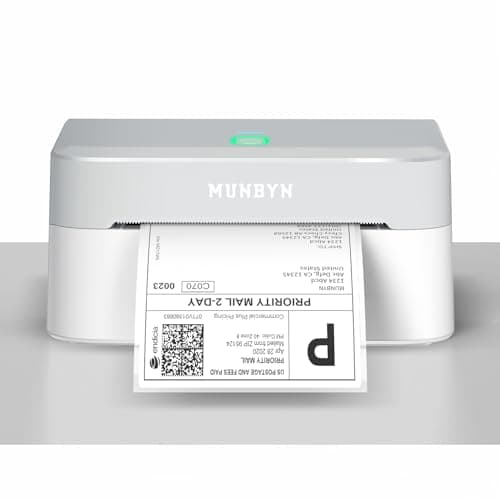
Because Florida requires both a net-weight statement and a full ingredient list, two inexpensive tools make compliance painless. A thermal label printer lets you produce consistent, professional ingredient labels on demand:
And a kitchen scale gives you the accurate net weights your labels legally require:
If you're building your first label from scratch, our step-by-step cottage food labeling guide walks through ingredient sub-listing, allergen wording, and font sizing with examples.
How much can you make? The $250,000 cap
Florida's cottage food sales cap is $250,000 in annual gross sales, written directly into §500.80(1)(a). The "Home Sweet Home Act," effective July 1, 2021, raised it to that level — the highest cap of any major state, versus $150,000 in Texas and a tiered $75,000/$150,000 structure in California.
Two details matter. First, the cap counts gross sales, not profit, and it aggregates every sale "at any location, regardless of the types of products sold or the number of persons involved in the operation." You can't split one kitchen into two brands to double the ceiling. Second, FDACS can require you to produce written documentation verifying your annual gross sales on request, so keep clean books from your first order.
If you ever exceed $250,000, the path forward is the same as elsewhere: move production into a licensed commercial or shared-use kitchen and operate as a permitted food establishment under §500.12. But with a quarter-million-dollar runway, most Florida bakers hit a capacity ceiling — hours in the day, oven space — long before they hit the legal one.
Make sure your menu is priced to profit before you scale. Our cottage bakery pricing formula shows exactly how.
How to start a cottage food business in Florida, step by step
- Confirm your menu is compliant — every item shelf-stable, nothing on the prohibited list. Check fillings as well as frostings.
- Reformulate any butter or cream cheese frosting onto a shortening, margarine, or vegan-butter base before you take a single order.
- Design your labels — business name, physical address, product name, full ingredient list, allergens, net weight, and the 10-point contrasting-color disclaimer.
- Set your prices to cover ingredients, packaging, and your time — not just the cost of flour and sugar.
- Choose your channels — farmers market, Instagram, or a website with online ordering and in-state shipping.
- Keep sales records from day one so you can document staying under $250,000 if FDACS asks.
- Start selling — no application, fee, or waiting period required.
For the equipment side, see essential baking tools for starting a home bakery and our line-by-line home bakery startup cost guide. If you're comparing Florida against another state before you commit, our cottage food laws by state guide puts the caps, frosting rules, and shipping allowances side by side.
Sources
Everything above was checked against primary and Extension sources on July 26, 2026:
- Florida Statutes §500.80, Cottage food operations — the $250,000 cap, the wholesale prohibition, internet and mail-order sales, and the five required label elements.
- FDACS — Cottage Foods — the approved cottage food product list and operating basics.
- UF/IFAS Extension Lee County — Cottage Food Operations "Home Sweet Home Act" 2021 Update — the prohibited foods list, including "homemade icings and frostings made from dairy-based cream cheese and/or butter," plus state preemption of local rules.
- FDACS Florida cottage food FAQs — the department's direct answer on butter and cream cheese icings and the shortening/margarine/vegan-butter alternatives.
Rules change. Confirm anything borderline with the FDACS Division of Food Safety at 1-800-HELP-FLA or FoodSafety@FDACS.gov before you sell.
Related reading
- Cottage food laws by state: 2026 guide — how Florida compares to California, Texas, and 9 other states.
- Cottage food permit: how to get one in your state — why Florida requires no permit, and which states still do.
- How much does it cost to start a home bakery? — real 2026 budgets across three tiers.
- How to price baked goods: a cottage bakery formula — charge so your menu actually profits.
- Essential baking tools for starting a home bakery — the equipment to buy once you're ready to sell.
What to do next
- How to take orders for a home bakery — the intake workflow you'll want from day one.
- Best bakery packaging for small businesses — boxes, bags, and labels that look the part.
- How to build a home bakery website — turn Florida's online-and-shipping allowance into real orders.
- Home bakery insurance: real 2026 costs — Florida asks for nothing; the farmers market almost certainly will.
Affiliate disclosure
Baker Setup is reader-supported. When you buy through links on our site, we may earn an affiliate commission at no extra cost to you. We only recommend products we've researched against the field — never sponsored placements.