If you already know how to bake, your real problem isn't the recipe — it's finding paying customers. This guide to how to sell baked goods online walks you channel by channel, from free word-of-mouth to in-state shipping, and tells you which one fits your situation. It also fixes the mistake nearly every "sell baked goods online" listicle makes: pretending you can legally mail cookies across the country. Let's start there, because the legal reality decides which channels are even open to you.
Is it legal to sell baked goods online from home?
Yes — with a catch. Cottage food law lets you sell low-risk baked goods made in your home kitchen, but "online" almost always means taking orders online and fulfilling them locally, not shipping to strangers nationwide.
A cottage food law is a state exemption that lets you sell shelf-stable, low-risk foods — cookies, breads, cakes with non-perishable frosting — from a home kitchen without a commercial license. What counts as legal varies by state, so check your state's cottage food law before you sell. Some states cap annual revenue; others require a food-handler course or a kitchen inspection.
Here's the distinction that matters most: selling online is not the same as shipping online. Listing your brownies on Facebook and handing them to a local buyer is a cottage food sale. Mailing those same brownies to another state is interstate commerce, which falls under FDA jurisdiction — and your state cottage exemption no longer protects you.
According to guidance compiled by cottage-food resource FindHomegrown, no cottage food law permits interstate shipping. The one carve-out is North Dakota, which passed SB 2386 in 2025 to drop its ban on interstate cottage food sales (federal and the buyer's state rules can still apply). Pennsylvania home bakers can ship out of state only under a separate, inspected limited food establishment registration — not a cottage food exemption. Roughly 35 states allow some form of in-state mail order or delivery, ranging from full in-state shipping to vendor-only delivery to in-person-only pickup — always verify the rules for your specific state.
The bottom line: you can legally sell baked goods from home almost anywhere, but you can only ship them within your own state (unless you're in North Dakota) — and only if your state allows shipping at all. Some don't: Minnesota and Washington require in-person handoff or delivery. That single fact shapes every channel below.
Where can you sell homemade baked goods? The 5 best channels
There are five practical channels for selling homemade baked goods online, ordered here from lowest to highest effort and reach. When people ask how to sell baked goods online, the honest answer is that you do not need all five — you need the one that matches your stage and product.
Use this table to figure out where to sell homemade baked goods for your situation, then read the matching section below.
| Baker type | Best primary channel | Effort | Cost | Reach |
|---|---|---|---|---|
| Brand-new, no following | Local & word-of-mouth | Low | ~$0–$75/event | Neighborhood |
| Wants steady local orders | Facebook Groups & Marketplace | Low | Free | Your town/region |
| Custom cakes & decorated cookies | Medium | Free | Regional, visual | |
| Ready to own the customer | Your own website | Medium–High | $10–$20/mo | In-state |
| Sells shelf-stable treats | Shipping (in-state) | High | Packaging + postage | Statewide (or national in ND) |
Most bakers stack two channels: one for discovery (Facebook or Instagram) and one for ordering (a form or website). Before you scale any of them, price your baked goods for profit so every order actually pays you.
Channel 1: Local and word-of-mouth (the free starting point)
Local, in-person selling is the fastest way to earn your first dollar with zero platform fees and zero legal ambiguity — the buyer is standing in front of you, in your state. It fits brand-new bakers with no online presence.
Farmers markets, pop-ups, and craft fairs
Farmers markets and craft fairs put you in front of buyers who came specifically to spend money on local goods. Booth fees typically run $20–$75 per day, so you need to clear that in sales before you profit — usually 15–25 cookies or a handful of loaves.
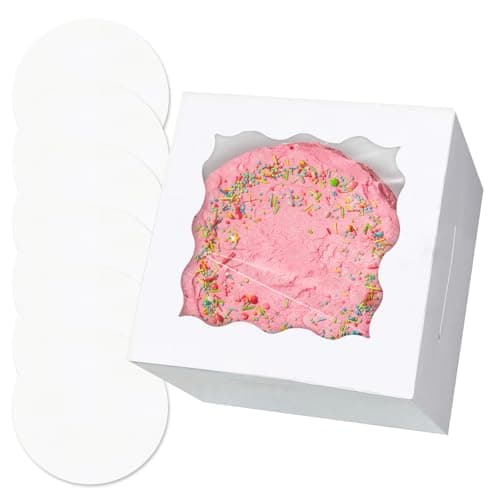
Bring a card reader (Square's costs about $10), a clear price sign, and small samples. Package single items in a simple window box so buyers can see the product and carry it home clean.
Coffee shops, cafes, and wholesale/consignment
Local coffee shops, cafes, and specialty grocers often take baked goods wholesale (they buy from you at ~50% of retail) or on consignment (they pay you only for what sells). Wholesale gives you guaranteed money; consignment shifts the risk to you but is easier to land.
Pitch one cafe with three signature items, a wholesale price sheet, and a sample box. One standing weekly order — say, three dozen scones every Friday — can become steadier income than any single online channel.
Channel 2: Facebook Groups and Marketplace (how to sell baked goods on Facebook)
Facebook is the single best free channel for reaching local buyers when you sell baked goods online from home, which is exactly what cottage food law requires. To sell baked goods on Facebook, post in local buy/sell groups and cottage-food community groups, or list items on Marketplace, then take orders through comments and DMs.
Search for two kinds of groups in your area:
- Local buy/sell/trade groups — "[Your Town] Buy Sell Trade," neighborhood, and mom groups where people already shop from each other.
- Cottage food and home baker groups — buyers here specifically want homemade treats and understand pickup logistics.
Post a clear photo, your price, pickup location and dates, and one line on how to order. Repost weekly menus and seasonal specials (Valentine's, holidays) — those drive the biggest spikes.
Setting up orders without a website
You don't need a website to run Facebook orders. Use a simple comment-to-order flow ("comment SOLD on the flavor you want") and move the details to DMs. Then route every buyer to one intake link — a free Google Form — so orders don't get lost across a dozen message threads.
Standardize this early. A repeatable process for intake, payment, and pickup is the difference between a hobby and a business — here's how to set up a repeatable order-taking workflow that scales from 5 to 50 weekly orders.
One compliance note: keep every Facebook sale in-state. If a buyer three states away wants to order, you generally cannot mail it (see the legal section above).
Channel 3: Instagram (visual demand generation for custom orders)
Instagram is a demand-generation engine, not a checkout — it fits custom cakes, decorated cookies, and anything that photographs well. Its job is to make people want your work and slide into your DMs; the actual order happens through a form or invoice.
Post consistently: finished products, behind-the-scenes reels, and clear "how to order" callouts in your bio and captions. Use local hashtags and your city's geotag so nearby buyers find you. Reels of a cake being decorated or cookies being flooded routinely out-reach static photos.
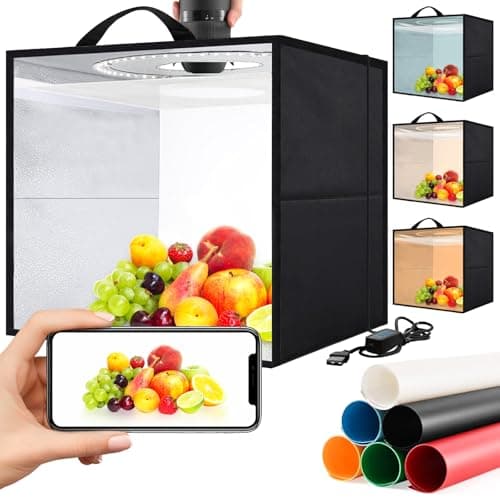
Photo quality directly drives inquiries. A small light box gives you clean, consistent product shots without a studio — the same photos work for Instagram, Facebook, and your website.
When the DMs come in, don't negotiate custom cakes in Instagram messages — send buyers to your order form so pricing, dates, and deposits are captured cleanly the same way every time.
Channel 4: Your own website (own the customer, skip platform fees)
A simple website you own is the best platform to sell baked goods online for the long term because it carries no per-listing or transaction fees and keeps the customer relationship yours. For $10–$20 per month, a basic site with an order form beats renting space on a marketplace.
Here's why "you don't need Etsy" is more than a slogan. Etsy is the only major platform that stacks a per-listing fee, a percentage transaction fee, and payment processing — with no local-buyer discovery, which is the one thing a cottage baker actually needs. Compare the realistic options:
| Platform | Monthly cost | Per-order fees | Local discovery | Best for |
|---|---|---|---|---|
| Your own website | $10–$20 | Payment processing only (~2.9%) | No (you drive traffic) | Owning repeat customers |
| Etsy | $0 base | Listing fee + transaction % + processing | No | Rarely the best fit |
| Homegrown | ~$10 | No listing or transaction fees | Yes (cottage-focused) | In-state cottage sellers |
| Bakesy | Varies | Built for custom orders | Limited | Custom cake/cookie ordering |
| Square Online | $0 tier | Payment processing only | No | Free starter storefront |
The move: use a free channel (Facebook, Instagram, local) to create demand, and a low-cost site to capture it. When you're ready, here's how to build a simple home bakery website with an order form and menu. A website also lets you present pricing and packaging professionally — pair it with the best bakery packaging for small businesses so the unboxing matches the brand.
Channel 5: Shipping baked goods nationwide
Shipping is the highest-effort, highest-reach channel — and the one with the biggest legal trap. Get the rules right, ship only what survives transit, and pack it properly.
The legal reality first
To repeat the key fact: you generally cannot ship baked goods across state lines. Interstate shipping is FDA-regulated commerce that no cottage food exemption covers, with North Dakota's SB 2386 (2025) as the lone exception. About 35 states allow some in-state mail order or delivery — so "shipping nationwide" realistically means "shipping statewide" for almost everyone. Confirm your state's specific mail-order rules before you list a shipping option.
Which baked goods ship well (and which don't)
Only sturdy, shelf-stable items ship reliably. Anything crumbly, perishable, or heat-sensitive should stay a local-pickup item.
| Ships well (5–7 days airtight) | Ships poorly — keep local |
|---|---|
| Cookies, brownies, blondies | Anything with buttercream or cream cheese frosting |
| Bars, biscotti, granola | Delicate crumbly cakes and pastries |
| Quick breads, banana bread | Custard, cream, or fresh-fruit fillings |
| Drop cookies, shortbread | Chocolate-coated items in summer heat |
How to ship baked goods safely: step-by-step packaging
The method that keeps cookies intact is simple and repeatable:
- Cool completely. Warm goods trap steam and turn soggy or moldy in transit.
- Wrap individually. Plastic-wrap items in pairs, flat sides together, pressing out trapped air.
- Add a second barrier. Foil or parchment, then a sealable bag or airtight container. (Soft-cookie hack: tuck in a slice of white bread to hold moisture.)
- Cushion inside a sturdy box. Fill every gap so nothing shifts — packed tight, items can't rattle and break.
- Ship in a rigid outer box or padded mailer sized to minimize empty space.
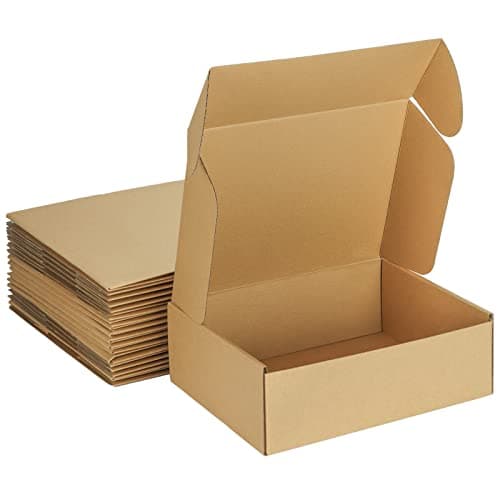
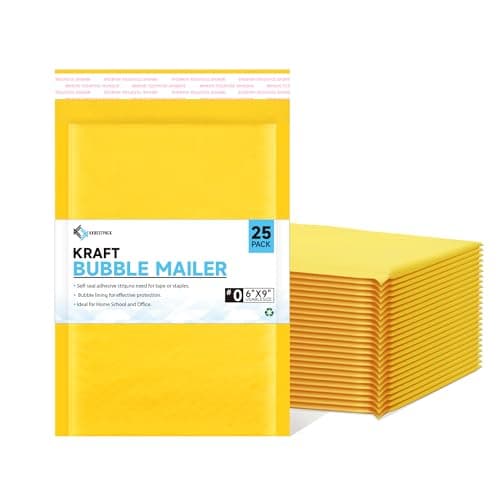
For the outer shipment, a small corrugated box handles heavier or multi-item orders, while a padded kraft mailer works for a few wrapped cookies or bars.
If you're also boxing cakes for local delivery, choosing the right bakery box size keeps them from sliding around in transit.
USPS Priority Mail: cost, timing, and when to ship
USPS Priority Mail is the best value for 1–5 lb bakery shipments: 1–3 business day delivery, tracking, and up to $100 insurance, for packages up to 70 lb. A Medium Flat Rate box costs about $11.30 and reaches any US destination in 1–3 days regardless of weight, so it's the default for most cookie and bar orders.
Timing matters as much as packaging:
- Ship Monday or Tuesday so packages never sit in a weekend warehouse.
- Mail within ~24 hours of baking for peak freshness on arrival.
- Label everything clearly — "Fragile" and "Perishable — Open Immediately" cut mishandling and spoilage.
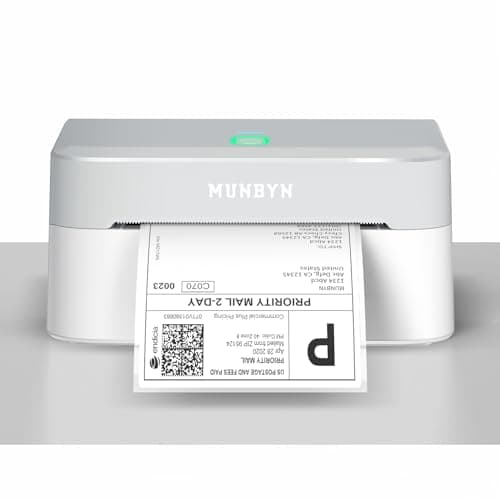
Once you're shipping more than about 4–5 orders a week, hand-writing and taping labels becomes the bottleneck. A thermal label printer prints a clean 4x6 shipping label in seconds — no ink, no tape.
Related reading
- Cottage food laws by state — confirm what you can legally sell and ship before you list anything.
- How to take orders for a home bakery — the intake, payment, and scheduling workflow behind every channel above.
- How to build a home bakery website — set up a low-cost site that skips marketplace fees.
- How to price baked goods: the cottage bakery formula — make sure every online order actually turns a profit.
What to do next
Don't try to launch all five channels at once. This week, pick the single channel that matches your stage from the decision table above — for most brand-new bakers, that's one local Facebook group plus a free Google Form for orders.
Set it up, post one clear menu with photos and pickup details, and take your first three orders. Then price your baked goods for profit and build the order-taking workflow that lets you handle volume without living in your DMs. Add shipping only after local demand is steady — and only within the states your cottage food law allows. Learning how to sell baked goods online from home is really just this: start with one channel, get it repeatable, then expand.