
Note: This is a plain-English guide, not legal advice. California's sales caps adjust for inflation annually and county fees vary — verify the current figures with CDPH and your county environmental health department before you start selling.
Do you need a license? Class A vs Class B
Yes — unlike Texas or Florida, California requires you to register or permit your operation through your local county environmental health department. Which one depends on how you want to sell:
| Class A | Class B | |
|---|---|---|
| What it is | Registration | Permit |
| Kitchen inspection | No (self-certification) | Yes, before approval |
| Sales allowed | Direct only | Direct + wholesale |
| 2025 sales cap | ~$86,206/yr | ~$172,411/yr |
| Cost | Lower (county fee) | Higher (inspection + fee) |
Both tiers require:
- Food-safety training for you and any employee, retaken every 3 years (an online course like Learn2Serve runs about $10).
- Annual renewal with your county (some charge a renewal fee).
- A water test if you're on a private well, or a septic inspection if applicable.
Most home bakers start with Class A — it's faster, cheaper, and covers in-person, online, and shipped direct sales. Move to Class B only when you want your products carried by retail stores or restaurants.
What you can (and can't) sell
California limits you to non-potentially-hazardous items on the CDPH Approved Cottage Foods List.
Allowed:
- Breads, cookies, cupcakes, muffins, tortillas, and cakes (including wedding cakes)
- Buttercream frosting (allowed in California)
- Candy, chocolate, and fudge
- Jams, jellies, preserves, and fruit butters (compliant with federal standards)
- Honey, nut butters, and vinegars
- Dry mixes, spices, coffee, tea, granola, popcorn, and dried fruit
Prohibited:
- Perishable baked goods (cream pies, cheesecakes, custard-filled items)
- Acidified or canned foods, pickles, salsas, sauces, chutneys, and applesauce
- Fermented foods, juices, and carbonated drinks
- Oils, meat jerkies — anything potentially hazardous
Where and how you can sell
Your class sets your channels:
- Class A — direct only: sell in person, online, by in-state shipping, and through delivery apps (DoorDash, Uber Eats). No stores or restaurants.
- Class B — direct + indirect: everything Class A can do, plus selling wholesale to retail stores, grocers, and restaurants. (Restaurants serving your product must disclose it on the menu.)
Two limits apply to both:
- California only. All sales and deliveries must stay in-state — no interstate shipping.
- One employee max. You may have at most one non-family employee.
How to label your products
California has detailed labeling. Each package must show:
- The product name and your business name
- Your business address (city/state/ZIP always; street can be omitted only if your home is in a current phone directory)
- The county that issued your permit/registration and your permit/registration number
- A full ingredient list, in descending order by weight
- An allergen statement — "Contains: wheat, milk, eggs…"
- The net weight / net quantity (US and metric)
- The disclaimer "Made in a Home Kitchen" (or "Repackaged in a Home Kitchen" for recombined commercial items), in at least 12-point type
Your website and advertising must also display the county name, permit number, and "Made in a Home Kitchen."
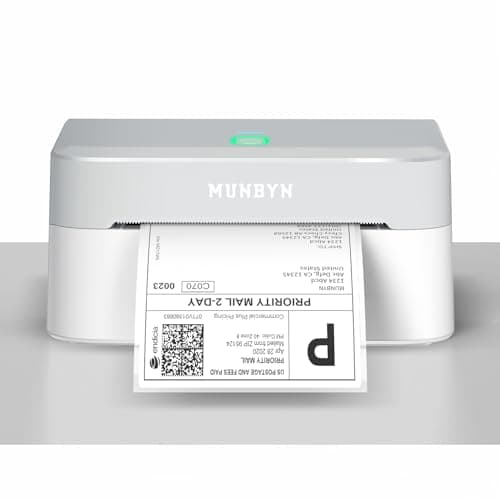
Because California requires a full ingredient list and a net-weight statement on every package, a thermal label printer makes consistent, compliant labels far easier than handwriting them:
And an accurate kitchen scale gives you the net weights your labels legally require:
How much can you make? The two caps
As of 2025, the gross annual sales caps are approximately:
- Class A: $86,206/year
- Class B: $172,411/year
Both figures adjust for inflation every year, so always confirm the current number against CDPH before you rely on it. If you outgrow Class B, the next step is a licensed commercial or shared-use kitchen and operating as a full food facility.
Before you scale, make sure your prices clear a profit — our cottage bakery pricing formula shows exactly how to charge so revenue becomes income.
How to start a cottage food business in California, step by step
- Pick your class — Class A for direct sales, Class B if you want retail/restaurant accounts.
- Take a food-safety course (~$10, retaken every 3 years). Keep the certificate.
- Apply with your county environmental health department — Class A self-certifies; Class B schedules a kitchen inspection.
- Confirm your menu is on the CDPH Approved Cottage Foods List.
- Build compliant labels — name, address, county, permit number, ingredients, allergens, net weight, and "Made in a Home Kitchen" in 12-point type.
- Price your menu, choose your channels, and start selling within California.
For the equipment side, see essential baking tools for starting a home bakery and our home bakery startup cost guide.
Related reading
- Cottage food laws by state: 2026 guide — how California compares to Texas, Florida, and 9 other states.
- Cottage food permit: how to get one in your state — the Class A registration and Class B permit process, step by step.
- How to price baked goods: a cottage bakery formula — charge so your menu profits.
- How much does it cost to start a home bakery? — real 2026 budgets across three tiers.
What to do next
- How to take orders for a home bakery — the intake workflow you'll want from week one.
- How to build a home bakery website — set up the online ordering Class A and B both allow.
- Best bakery packaging for small businesses — boxes, bags, and labels that look professional.
- Home bakery insurance: real 2026 costs — not required by California law, but county markets and venues ask for a certificate.
Affiliate disclosure
Baker Setup is reader-supported. When you buy through links on our site, we may earn an affiliate commission at no extra cost to you. We only recommend products we've researched against the field — never sponsored placements.