
Note: This is a plain-English guide, not legal advice. Cottage food rules change — verify the current details with the Texas Department of State Health Services before you start selling.
Do you need a license to sell baked goods in Texas?
No. Texas does not require a license, permit, registration, or kitchen inspection to operate a cottage food business. In fact, state law specifically prohibits cities and counties from regulating, licensing, or charging a fee to cottage food producers.
There is exactly one requirement before you sell: you must complete an accredited food handler's training course. This is an online class (providers like Learn2Serve are state-approved), takes about two hours, and costs roughly $10–$15. Keep your certificate on file.
You only need to register with your local health department in a few specific situations:
- You want to sell perishable foods (like cheesecake or certain custards).
- You want to put a state-issued ID number on your labels instead of your home address.
- You want to sell another producer's cottage foods at a market.
For the typical home baker selling cookies, cakes, and breads, none of that applies — you complete the food handler course and you're legal to sell.
What you can (and can't) sell
Texas is unusual: instead of listing what's allowed, the law lists what's prohibited. If a food isn't on the banned list and isn't perishable, you can generally sell it.
Allowed (non-perishable):
- Breads, rolls, and all baked goods
- Cookies, cakes, and wedding cakes
- Buttercream frosting (allowed in Texas — many states ban it)
- Candy, chocolate, and fudge
- Jams, jellies, marmalades, and fruit butters (pH ≤ 4.6)
- Pickles and fermented/acidified foods with batch pH records
- Dried herbs, mixes, granola, popcorn, and nut butters
- Honey, and whole/hard-boiled eggs
Texas even allows certain perishable items — cheesecakes, cream pies, soups, casseroles — if you register for perishable sales with your local health department and sell them direct-to-consumer only.
Prohibited:
- Meat, poultry, seafood, and fish
- Raw milk and raw-milk products
- Low-acid canned goods and meat jerkies
- Ice cream, gelato, and other frozen dairy
- CBD/THC products and pet food
Where and how you can sell
Texas gives you wide latitude on sales channels. You can sell at:
- Your home, farmers markets, festivals, fairs, and roadside stands
- Online — take orders and payment over the internet
- By pickup, local delivery, or in-state mail/shipping for non-perishable items
Two rules to remember:
- In-state only. You cannot ship across state lines — no cottage food law permits interstate sales.
- Perishables are direct-to-consumer only. Registered perishable items can't be shipped or sold wholesale; the customer has to get them from you directly.
For non-perishable goods, you can even sell indirectly through some retail stores and restaurants — a bigger allowance than most states give.
How to label your products
Every cottage food product in Texas must carry a label with:
- Your business name and home address (or your DSHS-issued ID number)
- An allergen statement — "Contains: milk, eggs, wheat, soy…" as applicable
- This exact disclaimer:
THIS PRODUCT WAS PRODUCED IN A PRIVATE RESIDENCE THAT IS NOT SUBJECT TO GOVERNMENTAL LICENSING OR INSPECTION.
Perishable items (if you registered for them) also need a production date and "SAFE HANDLING INSTRUCTIONS: To prevent illness from bacteria, keep this food refrigerated or frozen until the food is prepared for consumption."
Texas does not require a full ingredient list or net-weight statement the way Florida and Michigan do — but listing ingredients is good practice and builds customer trust. (Double-check current requirements on the DSHS page, since label rules are the detail states tweak most often.)
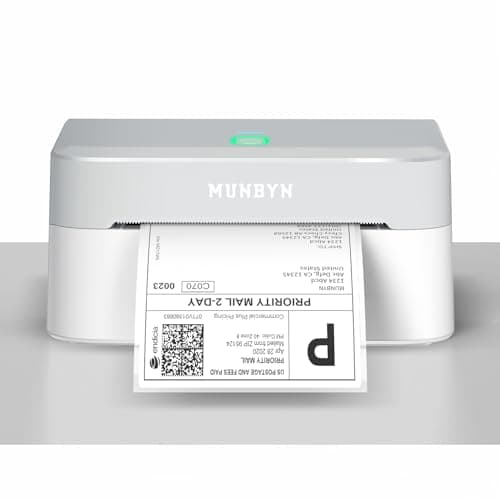
The cheapest way to produce clean, repeatable labels at home is a thermal label printer — no ink, just peel-and-stick rolls:
And if you start selling items priced by weight (granola, fudge, nut butters), a reliable kitchen scale keeps your portions — and your pricing — consistent:
How much can you make? The $150,000 cap
As of September 2025 (Senate Bill 541), the Texas cottage food sales cap is $150,000 in gross annual sales, up from the previous lower limit. Even better, the cap is now indexed to inflation, so it rises a little every year.
That's a generous ceiling — most home bakers never approach it. If you do, your next step is moving production into a licensed commercial kitchen or renting time in a shared/commissary kitchen, which converts you from a cottage operation into a licensed food establishment.
Before you scale, make sure your prices actually leave a profit. Our cottage bakery pricing formula walks through exactly how to charge so that hitting the cap means real income, not just revenue.
How to start a cottage food business in Texas, step by step
- Take an accredited food handler's course (~$10–$15, online, ~2 hours). Save the certificate.
- Decide what you'll sell — confirm each product is non-perishable and not on the prohibited list.
- Register only if needed — for perishable items, an anonymous label ID, or reselling others' goods.
- Set up labels with your name, address, allergen statement, and the required disclaimer.
- Price your menu to cover ingredients, packaging, and your time.
- Pick your channels — farmers market, Instagram, a simple website — and start taking orders.
For the equipment side of getting started, see essential baking tools for starting a home bakery and our real-numbers breakdown of how much it costs to start a home bakery.
Related reading
- Cottage food laws by state: 2026 guide — how Texas compares to California, Florida, and 9 other states.
- Cottage food permit: how to get one in your state — where Texas's no-permit model sits among the three national regulatory models.
- How much does it cost to start a home bakery? — real 2026 budgets, from a $500 lean setup to a $3,500 pro kitchen.
- How to price baked goods: a cottage bakery formula — what to charge so your menu actually profits.
- Essential baking tools for starting a home bakery — the equipment list once you're cleared to sell.
What to do next
- How to take orders for a home bakery — the order-intake workflow you'll want from week one.
- Best bakery packaging for small businesses — boxes, bags, and labels that look professional.
- How to build a home bakery website — set up online ordering so Texas's online-sales allowance actually pays off.
- Home bakery insurance: real 2026 costs — not required by Texas law — but required by most markets, and the substitute for an LLC.
Affiliate disclosure
Baker Setup is reader-supported. When you buy through links on our site, we may earn an affiliate commission at no extra cost to you. We only recommend products we've researched against the field — never sponsored placements.