
Note: This is a plain-English guide, not legal advice. Rules change — verify anything you plan to build a business on with the Ohio Department of Agriculture, Division of Food Safety before you sell.
Do you need a license to sell baked goods in Ohio?
Maybe not. Ohio law carves out a category called a cottage food production operation, defined in Ohio Revised Code 3715.01(A)(19) as a person who, in their own home, produces food items that are not potentially hazardous — bakery products, jams, jellies, candy, fruit butter, and similar products named in the state's rules.
If your entire menu fits that definition, you can start selling today. Ohio's cottage food rules, Ohio Administrative Code Chapter 901:3-20, contain no registration requirement, no permit, no fee, and no kitchen inspection. The state's only routine oversight is the director of agriculture's authority to take product samples to check for adulteration or misbranding (rule 901:3-20-03).
The moment your menu includes something that needs refrigeration, though, you're no longer a cottage food operation — and that's where the second track comes in.
Cottage food operation vs. home bakery: which are you?
The test is one question: does any product you sell require refrigeration to be safe?
- No → you're a cottage food production operation. Nothing to file.
- Yes → you need a home bakery registration from ODA, which means a $10 fee and a kitchen inspection.
Here's how the two compare:
| Cottage food production operation | Home bakery | |
|---|---|---|
| Governing law | ORC 3715.01, 3715.023, 3715.025; OAC 901:3-20 | ORC Chapter 911 (911.01–911.20) |
| Registration required | No | Yes — with ODA |
| Annual fee | $0 | $10 (single home-kitchen oven) |
| Kitchen inspection | No | Yes |
| Annual sales cap | None | None |
| Refrigerated baked goods | Prohibited | Allowed |
| Non-baked shelf-stable goods (jams, candy, granola) | Allowed, from the approved list | Not the point of the license — Ch. 911 covers bakery products |
| Sell outside Ohio | Prohibited | Not restricted by the cottage food rule |
| Renewal | n/a | Annually, by September 30 |
The $10 home bakery fee and the September 30 renewal date come straight from ORC 911.02, which was last amended by House Bill 96 of the 136th General Assembly, effective September 30, 2025. That section sets a $200 annual fee for a regular bakery, then carves out a $10 rate for anyone operating "a home bakery with only one oven, in a stove of ordinary home kitchen design and located in a home" — regardless of the oven's capacity.
One more statutory detail worth knowing before you register: ORC 911.03 says no new bakery may be established until its building plans and equipment have been approved by a certified building inspector, the Department of Agriculture, or the local board of health. In practice for a home bakery, that's the ODA inspection.
What the inspection looks at. Per ODA's home bakery fact sheet and Ohio State's Farm Office law bulletin, an inspector checks that walls, ceilings, and floors are clean, easily cleanable, and in good repair; that the kitchen has a mechanical refrigerator with a thermometer capable of holding 45°F; that the kitchen is pest-free with no carpeted floors and no pets in the home; and, if you're on a private well, that you have a water test from the past year showing a negative result for coliform bacteria. Your labels get checked too. Confirm the current checklist with ODA's Division of Food Safety before scheduling — these operational details live in ODA guidance rather than in statute, so they can be updated without a law change.
What you can (and can't) sell
Ohio's approved cottage food list is unusually specific. Rule 901:3-20-04 names exactly 20 categories, and rule 901:3-20-05(E) makes it illegal to produce anything not expressly on it. There is no "similar products" wiggle room in practice.
Allowed as cottage food:
- Non-potentially hazardous bakery products
- Jams and jellies
- Candy — but not fresh fruit dipped in or covered with candy
- Flavored honey from an exempt beekeeper
- Fruit chutneys and fruit butters
- Granola, granola bars, and granola bars dipped in candy (any fruit must be commercially dried)
- Maple sugar from an exempt maple syrup producer
- Popcorn, flavored popcorn, kettle corn, popcorn balls, caramel corn — but not raw popping corn
- Unfilled baked donuts
- Waffle cones, including waffle cones dipped in candy
- Pizzelles
- Dry cereal and nut snack mixes with seasonings
- Roasted coffee, whole bean or ground
- Dry baking mixes in a jar, including cookie mix in a jar
- Dry herbs and herb blends
- Dry soup mixes using commercially dried vegetables, beans, grains, and seasonings
- Dry seasoning blends
- Dry tea blends
Prohibited for cottage food operations (ORC 3715.025 and rule 901:3-20-05):
- Potentially hazardous foods — anything needing temperature control
- Acidified foods and low-acid canned foods — pickles, salsas, canned vegetables
- Adulterated or misbranded food
- Anything not expressly on the 20-item list
- Selling cottage food products outside the state of Ohio
Two details bakers miss constantly: filled donuts are out (the rule says unfilled), and chocolate-covered strawberries are out (candy excludes fresh fruit dipped or covered in candy). Rule 901:3-20-04(B) also bans reduced oxygen packaging — no vacuum sealing your cottage food products.
If your dream menu is cheesecake, cream pies, or filled pastries, don't try to squeeze it into cottage food. Spend the $10 and register a home bakery.
Where and how you can sell
Ohio is refreshingly relaxed here. The cottage food rules impose one venue restriction and it's geographic: rule 901:3-20-05(F) prohibits selling cottage food products outside the state of Ohio. Within Ohio, the rules don't limit you to farmers markets or in-person sales.
That means you can sell from home, at farmers markets, at fairs and events, and online — as long as the buyer is in Ohio. If you're building that channel, our guide to selling baked goods online walks through the setup, and how to build a home bakery website covers the storefront itself.
You can also go wholesale. Both ORC 3715.023(B) and rule 901:3-20-02(B) state that properly labeled cottage food products are acceptable for a licensed retail food establishment or food service operation to offer for sale or use in preparing food. That's a real advantage over states that lock cottage operators into direct-to-consumer only — a local coffee shop can carry your cookies.
How to label your products
Labeling is where Ohio actually enforces. ORC 3715.023 requires every cottage food product label to carry:
- The name and address of the business
- The name of the food product
- The ingredients, in descending order of predominance by weight
- The net weight and volume of the product
- This statement in ten-point type: "This product is home produced."
On top of that, rule 901:3-20-02 requires compliance with the federal food labeling rules at 21 CFR Part 101 — which is where your allergen declaration comes from. Ohio's statute doesn't spell out a "Contains: wheat, milk, eggs" line, but federal law does, so include one.
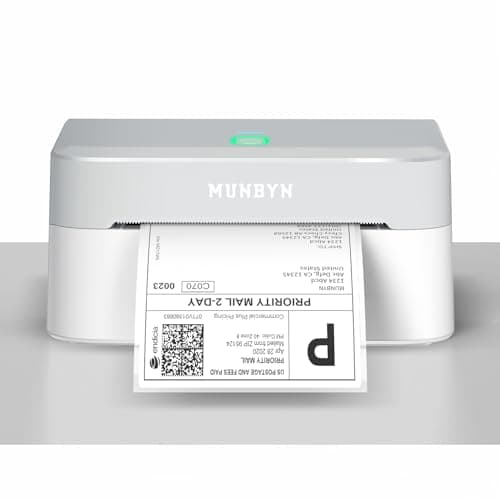
Selling misbranded food is an explicit violation under rule 901:3-20-05(C), and ODA can pull samples to check. A thermal label printer makes compliant, repeatable labels cheap to produce — no ink, just peel-and-stick rolls:
Because Ohio requires both net weight and volume, an accurate scale isn't optional — it's what makes that line on your label true:
For a walkthrough of every element and common mistakes, see how to label cottage food baked goods.
How much can you make?
There is no cap. Ohio's cottage food statutes and rules set no annual gross sales limit — unlike Michigan's $50,000 or California's tiered limits. The same is true of a home bakery registration under Chapter 911.
That makes Ohio one of the best states in the country for scaling a home-based baking business. The real ceiling is physical: a cottage food operation is limited to your home kitchen, and a home bakery registration at the $10 rate assumes a single ordinary home-kitchen oven. Add a second oven or a commercial range and you're outside the home bakery carve-out.
With no revenue cap, pricing discipline is what determines whether volume turns into profit. Our cottage bakery pricing formula shows how to price for margin, not just for revenue.
One change to watch: House Bill 134 of the 136th General Assembly would create a new microenterprise home kitchen operation registration, allowing home cooks to sell a much wider range of homemade foods — including canned goods and hot meals — for a $25 annual fee with training and inspection. The House passed it in November 2025 and it went to the Senate Agriculture and Natural Resources Committee, where it remained pending through spring 2026. It is not law yet. Don't plan a menu around it until it passes.
How to start, step by step
- Run the refrigeration test. Does any product need to be kept cold? If no, you're cottage food. If yes, you need a home bakery registration.
- Check your menu against rule 901:3-20-04. Every item must be expressly on the 20-category list. Filled donuts, chocolate-covered fresh fruit, and anything acidified or canned are out.
- If you need a home bakery: contact the ODA Division of Food Safety to register and schedule your inspection. Budget the $10 annual fee and renew by September 30 each year.
- Prep your kitchen if you're being inspected — clean and easily cleanable surfaces, a mechanical refrigerator with a thermometer, no pets, and a current well test if you're not on municipal water.
- Build your labels — business name and address, product name, ingredients by weight, net weight and volume, "This product is home produced." in ten-point type, plus a federal allergen statement.
- Price your menu to cover ingredients, packaging, and your time.
- Pick your channels — home, markets, events, online, or wholesale to Ohio retailers. Just keep every sale inside Ohio.
For the equipment side, see essential baking tools for starting a home bakery and our home bakery startup cost guide.
Related reading
- Cottage food laws by state: 2026 guide — how Ohio's no-cap rules compare to Michigan, Texas, California, and Florida.
- Cottage food permit: how to get one in your state — the cottage food vs. home bakery split, set against the national permit models.
- How to label cottage food baked goods — every element, with examples.
- How much does it cost to start a home bakery? — real 2026 budgets from lean to pro.
- How to price baked goods: a cottage bakery formula — what to charge so your menu profits.
What to do next
- How to take orders for a home bakery — the intake workflow you'll need from week one.
- How to sell baked goods online — make the most of Ohio's open venue rules, in-state.
- Best bakery packaging for small businesses — boxes, bags, and labels that look professional.
- Home bakery insurance: real 2026 costs — what to carry once you sell beyond your own front door.
Affiliate disclosure
Baker Setup is reader-supported. When you buy through links on our site, we may earn an affiliate commission at no extra cost to you. We only recommend products we've researched against the field — never sponsored placements.