Quick answer: The Minnesota cottage food law (Minn. Stat. § 28A.152) lets you sell non-perishable baked goods and acidic canned foods made at home, without a food license, up to $78,000 a year. You must register with the MDA every year: free with online training under $7,665 in sales, or $50 with a three-year food safety course above that. No shipping until August 1, 2027.
Note: This is a plain-English guide, not legal advice, current as of October 2026. Minnesota has already passed changes that take effect in 2027 (covered below), so confirm anything you're building a business on with the Minnesota Department of Agriculture cottage food program (MDA.Licensing@state.mn.us, 651-201-6062). MDA's Cottage Food Law Guidance FAQ and the 2024 statute text are the primary sources for this page.
Minnesota has a large cottage food community. According to University of Minnesota Extension, 14,116 producers were registered in 2025, spread across all 87 counties.
The Minnesota cottage food law is friendly to small bakers, but it has three hard edges that trip people up: you must register even at tiny volumes, every sale has to be handed over in person, and you can't sell to stores. This guide walks through each one.
Do you need a license to sell baked goods in Minnesota?
No license — but you do need a registration. The Minnesota cottage food law is an exemption from food licensing, set out in Minn. Stat. § 28A.152, the "Cottage Foods Exemption." So if you've been searching for a Minnesota cottage food license or a cottage bakery license in MN, what you actually need is an annual MDA registration. It has been on the books since 2015 and was amended in 2017 and 2021. In exchange for skipping a food handler license and a kitchen inspection, you register with MDA, complete food safety training, label correctly, and sell only directly to consumers.
MDA is explicit that this is not a license. Registration cards now read: "This is not a license. Products cannot be resold." Keep the card with you at markets — an inspector or market manager can ask to see it.
Who has to register. The statute applies to an individual who sells qualifying food. You may organize the business as a state-recognized business entity, such as an LLC or a DBA name, and still register as a cottage food producer. Registration is required before you sell, every year, regardless of how little you sell. Pages that say "no registration needed under $X" are wrong for Minnesota — Tier 1 producers still register; they just don't pay.
Who doesn't. MDA's guidance carves out two narrow groups:
- Occasional bake sales. If you're not "regularly engaged" in selling — say, a once-a-year charity bake sale — you don't need to register.
- Honey and maple syrup from your own hives or trees, with no added off-farm ingredients.
When cottage food isn't enough. You need a real food license from MDA, or a licensed commercial kitchen arrangement, if you want to:
- Sell wholesale to stores, cafés or restaurants
- Gross more than $78,000 in a calendar year
- Sell potentially hazardous food — cheesecake, cream pies, anything needing refrigeration
- Ship human food (not allowed for cottage producers until August 1, 2027)
If you're still mapping out which permit model your state uses, our cottage food permit guide explains the difference between registration states like Minnesota and permit or no-paperwork states.
Minnesota cottage food registration: Tier 1 vs. Tier 2
MN cottage food registration comes in two tiers based on gross annual sales. The tier sets your fee and your training requirement — nothing else about what or where you sell changes.
| Tier 1 | Tier 2 | |
|---|---|---|
| Gross annual sales | $7,665 or less | $7,666 – $78,000 |
| MDA registration fee | $0 | $50 (+ $2.50 processing fee if paid online) |
| Required training | Free MDA online training + exam | Approved safe food handling course (statute caps it at 8 hours) |
| Training cost | Free | $50 (UMN Extension online course) |
| Training frequency | Every year | Every 3 years |
| Registration expires | March 31 | March 31 |
| Renew by | April 1 | April 1 |
Sources: MDA registration page, MDA guidance FAQ, Minn. Stat. § 28A.152 subds. 4–5.
Where $7,665 comes from. The Tier 1 line started at $5,000 in 2015. The 2021 amendment indexed it to inflation, which moved it to $7,665. If you've seen a $5,000 or $18,000 figure on an older page or video, it's outdated.
The Tier 2 course. University of Minnesota Extension's Cottage Food Producer Food Safety Training is the standard option: online and self-paced, $50, with at least 12 months of access and a certificate at the end. Extension doesn't offer refunds, and it runs occasional in-person sessions as well. Extension also points to the Minnesota Farmers' Market Association's Cottage Foods Academy as a training resource; confirm with MDA which tier a given course satisfies before you enroll.
How to register, step by step
- Estimate your tier. Project your gross sales for the calendar year. If you might cross $7,665, register as Tier 2 from the start rather than scrambling mid-year.
- Complete your training. Tier 1: MDA's free online training and exam (every year). Tier 2: an approved course such as UMN Extension's ($50, every three years). Keep the certificate.
- Apply with MDA. Online through the MDA cottage food page (short URL: mda.state.mn.us/cottagefood) or with a paper application. You'll provide your full name, address, contact details, and your Social Security number or Minnesota Tax ID, plus an optional business name.
- Pay the fee. $0 for Tier 1; $50 for Tier 2, plus a $2.50 processing fee online.
- Wait for your card. MDA says to allow about 3–4 weeks. Under the statute, MDA must act within 30 days, and a registration is deemed accepted after 30 days. Your card arrives by mail with your registration number, which you can use on labels.
- Renew every year. All registrations expire March 31. MDA mails a reminder roughly six weeks before. Renew by April 1 to keep selling without a gap.
What changes on August 1, 2027 (and why the statute online looks different)
Nothing below is law yet. In 2025 the Legislature rewrote the cottage food exemption (Laws 2025, chapter 34, article 5; MDA refers to it as HF 2446), but the changes take effect August 1, 2027. Until July 31, 2027, the two-tier system above is the law.
This matters because the Revisor's "current" page for § 28A.152 already displays the amended text, with a note about the future effective date. If you skim that page you'll see a $30 fee and permission to ship — and both are wrong for 2026. Use the 2024 edition of the statute for the rules that apply today.
| Now (through July 31, 2027) | Starting August 1, 2027 | |
|---|---|---|
| Tiers | Tier 1 and Tier 2 | One tier for everyone |
| Annual fee | $0 (Tier 1) / $50 (Tier 2) | $30 for every registrant |
| Training | Tier 1: annual MDA course; Tier 2: approved course every 3 years | Approved safe food handling course (8 hours max, every 3 years) for all registrants |
| Shipping | Not allowed for human food | Mail or commercial delivery allowed — within Minnesota only, per MDA |
| Canned goods | Must be made and sold in Minnesota | Still Minnesota-only |
| Who qualifies | An individual (may use an LLC or DBA) | Individual, sole proprietor, single-member LLC, or two-member LLC whose members live at the same residence |
| Licensed food businesses | — | Can't use the exemption if you hold a § 28A.04 food handler license |
| Sales cap | $78,000 | $78,000, adjusted for inflation by MDA every two years (July 2025 base) |
Sources: Revisor § 28A.152 with 2025 amendments, MDA guidance FAQ.
What it means for you:
- Tier 1 producers will start paying ($30) and will need the longer approved course instead of the free annual one.
- Tier 2 producers save $20 a year on the fee.
- In-state shipping opens a real new channel in 2027 — but don't buy mailers for human food yet.
MDA says it "will begin implementation planning in 2026," so expect details on forms and approved courses closer to the date. We'll update this page when MDA publishes them.
What you can and can't sell under the Minnesota cottage food law
The rule is simple to state: cottage food must be non-potentially hazardous, using the definition in Minnesota's food code (Minn. R. 4626.0020, subp. 62). In practice, that means food that's safe at room temperature. The statute also allows home-canned pickles, vegetables and fruits with an equilibrium pH of 4.6 or below, or a water activity of 0.85 or below.
Allowed, per MDA's training materials and fact sheet:
- Baked goods — cookies, breads, bars, unfilled cakes, muffins
- Candy and confections
- Icings, frostings and sugar art
- Jams, jellies, preserves and fruit butters
- Acidified or naturally acidic canned fruits, vegetables and pickles
- Fermented foods, vinegars and condiments
- Dried or roasted beans, herbs, nuts and seeds
- Freeze-dried items that aren't potentially hazardous
- Foods with hemp seed ingredients
MDA adds a caveat worth taking seriously: "Depending on the recipe, some of these items could be potentially hazardous and may need to be tested."
Not allowed, per MDA:
- Cheesecake
- Fresh cut fruit used as a topping or garnish
- Chocolate-covered fresh fruit, such as dipped strawberries
- Dairy foods: yogurt, ice cream, butter, cream cheese, flavored butters (butter baked inside a cookie is fine)
- Meat, fish and eggs, including pickled eggs and jerky; charcuterie boards
- Cooked rice or vegetables; cut melon, tomatoes or leafy greens
- Garlic- or herb-in-oil products such as pesto
- THC or CBD foods
- Tamales, egg rolls, spring rolls
- Juice that hasn't been heat-treated
No on-site prep. You can't prepare food at a market or event. MDA's examples include spreading condiments on baked goods, brewing coffee, making lemonade or "dirty sodas," and cooking pancakes. Everything must arrive finished and packaged.
The pie question
MDA hasn't published a pie-by-pie ruling, so here's the safe reading of the rules. Custard, cream, pumpkin, sweet potato, meringue and cheesecake-style pies need refrigeration and are out. Fresh cut fruit toppings are explicitly out. Baked double-crust fruit pies are generally shelf-stable and fit the non-potentially hazardous definition — but if your recipe is borderline, ask MDA or Extension before selling, and be ready to have it lab-tested.
Frostings and cream cheese
"Icings and frostings" are on the allowed list, but cream cheese is on the not-allowed dairy list. Most cream cheese frostings won't qualify; shelf-stable buttercreams and royal icing do. If a frosting recipe sits in a gray zone, MDA's testing caveat applies.
Canned goods and pet treats
Canned and acidified foods have an extra rule: they must be made and sold in Minnesota. Non-canned cottage foods can be made out of state but must still be handed to the customer in Minnesota. Separately, baked or dehydrated dog and cat treats are covered by their own statute (§ 25.391) — and unlike human cottage food, they can be shipped.
Where and how you can sell (markets, home, online, delivery)
Every Minnesota cottage food sale must be direct to the consumer and handed over in person. The statute lists three venues (§ 28A.152, subd. 2):
- Farmers' markets and community events. MDA defines a community event as an organized event with a set start and end time, multiple vendors, and open to the public.
- From your home, to the extent your local ordinances allow.
- Donations to fundraising events.
Online ordering is fine; online delivery is not. You can advertise and take orders online, by phone or through social media. The food itself must change hands in person: pickup at your home, pickup at your market or event booth, or delivery by you to the customer's home or an agreed meeting spot in Minnesota.
MDA's FAQ adds that you or your employee must be physically present for the sale or delivery. You can't leave orders for pickup anywhere other than the buyer's or your own residence. Our guide to taking orders for a home bakery covers a simple intake workflow built around scheduled pickups.
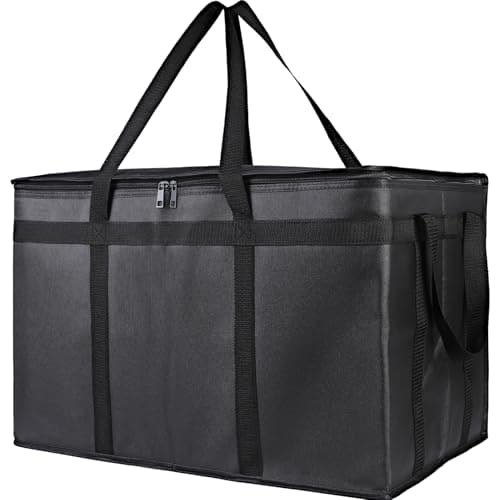
Because personal delivery is the only way to get food to a customer who can't come to you, an insulated bag keeps boxed cakes and cookies presentable in a hot car in July — and stops frosting from sliding around on bumpy county roads:
No shipping — yet. Human cottage food cannot be mailed or sent by commercial carrier under current law. That changes August 1, 2027, and then only within Minnesota. This is a stricter rule than most of the states in our guide to selling baked goods online, so use that guide for storefront and ordering setup, not for fulfillment.
No stores, cafés or pop-ups. You can't sell to grocery stores, restaurants, coffee shops or any other business, and you can't sell from your own or a friend's storefront — even a one-day pop-up — unless a qualifying farmers' market or community event is held there.
Honor stands are a gray area. MDA says an unattended stand is allowed only where local zoning permits it, and advises precautions. The FAQ also says the producer or an employee must be present for sales. Treat a self-serve roadside stand as unsettled and ask MDA before building one.
Samples are allowed at markets and events under § 28A.151: free portions of 3 ounces or less.
Your city or county still counts. The statute expressly doesn't override local business licensing, sanitation, public health or zoning rules (subd. 6). Check with your city before selling from home. You may produce in your home kitchen, or in a commercial kitchen if local ordinances allow — but not while anyone in your household is sick.
How to label Minnesota cottage food
Minnesota's label rules are short, and one sentence must be exact. Under § 28A.152, subd. 1, every product label needs:
- Your name (full name or registered business name) and either your registration number or your address
- The date the product was prepared
- Ingredients and any possible allergens
- This statement, word for word: "These products are homemade and not subject to state inspection."
The same statement must also appear on a clearly legible sign or placard at the point of sale, and on any website where you offer your food.
Allergens. MDA wants allergens declared in the ingredient list, for example "flour (wheat)", or through an ingredient's common name that already makes the allergen obvious, such as buttermilk.
Sample Minnesota cottage food label:
Brown Butter Chocolate Chip Cookies Jane Doe Bakes · MN Cottage Food Reg. #12345 Prepared: 10/03/2026 Ingredients: flour (wheat), butter (milk), brown sugar, sugar, chocolate chips (sugar, chocolate, cocoa butter, soy lecithin), eggs, vanilla, baking soda, salt These products are homemade and not subject to state inspection.
Notice what Minnesota's cottage food statute doesn't require: net weight or a street address (your registration number can stand in). It does require a prepared date, which many states skip. Adding net weight and a "Contains:" line for the nine major allergens is still good practice — our cottage food labeling guide shows how.
Because the prepared date changes with every batch, printing labels on demand beats hand-writing them. A thermal printer handles the date line cheaply; round and full-sheet labels work for jars and boxes:
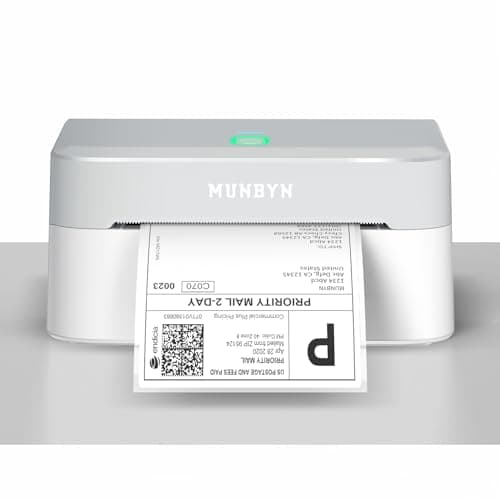
MUNBYN Bluetooth Thermal Label Printer RW403B, Wireless 4x6 Shipping Label Printer for Small Business, Compatible with Android, iPhone, Windows, Mac, Chromebook, Print Width 1.57"-4.25" (Grey)
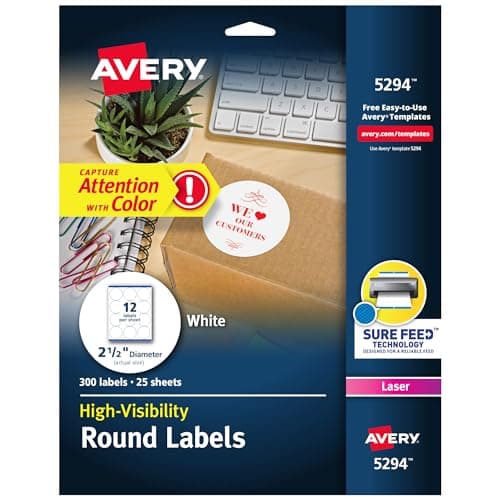
Avery Round Printable Labels, 2.5" Diameter, Matte White, Sure Feed Technology, Laser & Inkjet Compatible, 300 Blank Labels Total, Great for Branding, Packages, School Supplies, and More (5294)
Waterproof Sticker Paper, 25 Sheets, White Matte Vinyl-Like, 8.5" x 11" Full Sheet Label, Works with Inkjet Printers Only, Compatible with Electronic Cutting Machines, OL177WJ, OnlineLabels
Minnesota cottage food sales limit: how much can you make?
The cap is $78,000 in gross receipts per calendar year (§ 28A.152, subd. 3). Gross means total sales before costs — ingredients, packaging and your time all come out of that $78,000, not on top of it. That puts Minnesota in the moderate band nationally: more room than Michigan's $50,000 cap, with stricter venue rules than states like Ohio that have no cap at all. Our cottage food laws by state comparison shows the full spread.
What the two lines look like week to week (illustrative, at $30 per dozen cookies):
| Annual gross | Per week | Dozens per week at $30 |
|---|---|---|
| $7,665 (Tier 1 ceiling) | ~$147 | ~5 |
| $78,000 (cap) | $1,500 | 50 |
Five dozen a week is a busy hobby. Fifty dozen a week is a full-time business run out of a home kitchen — and at that volume, under-pricing is the fastest way to work hard for nothing. Use our cottage bakery pricing formula: (ingredient cost × 3) + (labor hours × $15–25) + packaging, with a 25–40% premium on custom work.
Taxes. MDA says cottage food sales are subject to income tax and "may be subject to sales tax." It doesn't spell out which products are taxable, so call the Minnesota Department of Revenue (651-556-3000) before you set prices.
Insurance. The cottage food exemption doesn't protect you from liability if a customer gets sick or has an allergic reaction. Policies such as FLIP run about $25.92 a month ($299 a year) for $1M/$2M coverage — see our home bakery insurance guide for the full cost comparison.
In short: under the Minnesota cottage food law, register in the tier that matches your projected gross, price for margin, and plan for a licensed setup if you're on track to pass $78,000.
How Minnesota compares to other Midwest states
The Minnesota cottage food law allows more sales than Michigan's but is stricter on fulfillment than Michigan, Illinois or Ohio, all of which already allow in-state shipping. Here's how it stacks up against the Midwest states we've covered in depth:
| State | License or registration | Annual sales cap | In-state shipping |
|---|---|---|---|
| Minnesota | Annual MDA registration ($0 Tier 1 / $50 Tier 2) | $78,000 | Not until Aug 1, 2027 |
| Michigan | None | $50,000 | Yes |
| Illinois | Annual county health department registration (fee capped at $50) | None | Yes |
| Ohio | None for shelf-stable cottage food | None | Yes |
Sources: our state guides linked above. We haven't published guides for Minnesota's other neighbors (Wisconsin, Iowa, North Dakota, South Dakota), so check those states' agencies directly if you live near a border.
The bottom line: Minnesota's registration step and in-person-only rule make it more hands-on than these three states, and selling to stores or other businesses isn't allowed.
If you're starting from scratch, our how to start a home bakery guide covers the business side, and the home bakery business plan template helps you decide which tier to target.
Related reading
- Cottage food laws by state: 2026 guide — how Minnesota's $78,000 cap and registration model compare nationally.
- Cottage food permit: how to get one in your state — registration vs. permit vs. no-paperwork states, explained.
- How to label cottage food baked goods — every label element, with examples.
- How much does it cost to start a home bakery? — real 2026 budgets, including registration and training.
- How to price baked goods: a cottage bakery formula — what to charge so the $78,000 cap is profit, not just volume.
What to do next
- How to take orders for a home bakery — set up pickup and delivery slots that fit Minnesota's in-person rule.
- How to sell baked goods online — take orders online, then hand off in person in Minnesota.
- Best bakery packaging for small businesses — boxes and labels that hold up at markets and on delivery runs.
- Home bakery insurance: real 2026 costs — what to carry before your first farmers' market.
Affiliate disclosure
Baker Setup is reader-supported. When you buy through links on our site, we may earn an affiliate commission at no extra cost to you. We only recommend products we've researched against the field — never sponsored placements.